
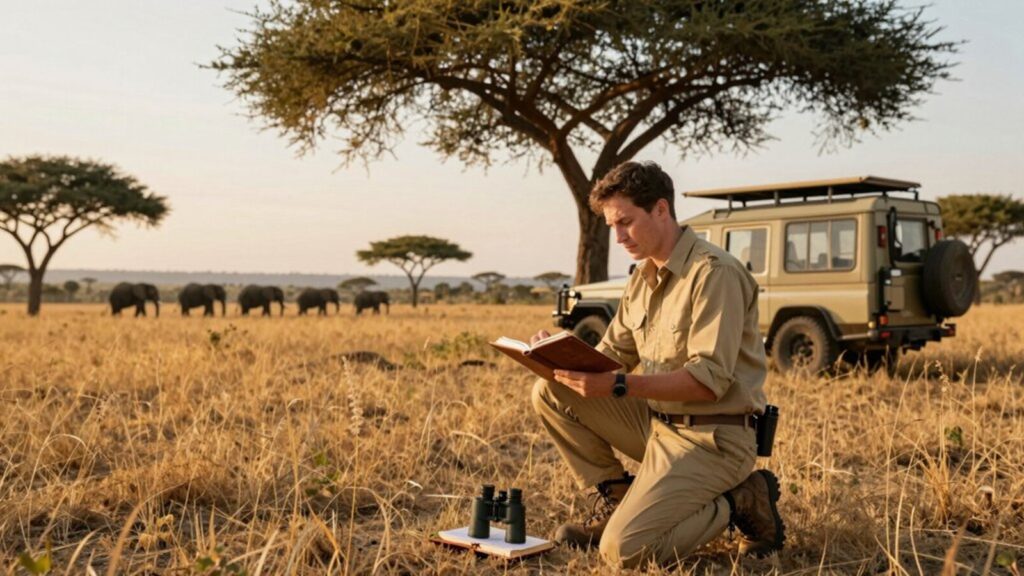
South Africa’s Eastern Cape field guide course combines professional training with wildlife conservation, allowing volunteers to earn the nationally recognized FGASA Level 1 qualification—a credential that opens doors to guiding careers across Africa—while contributing to real monitoring work on a 6,000-hectare private reserve. The intensive eight-week program balances classroom theory covering ecology, tracking, and astronomy with practical patrols, game counts, and camera-trap deployment, culminating in a formal assessment of both fieldcraft and knowledge; shorter two- and four-week placements offer exposure without full certification, while all options include shared accommodation, meals, and weekend excursions from Port Elizabeth. The sections ahead walk through eligibility, curriculum details, daily rhythms, costs, and what graduates have achieved afterward.
Who Should Consider the South Africa Field Guide Course?
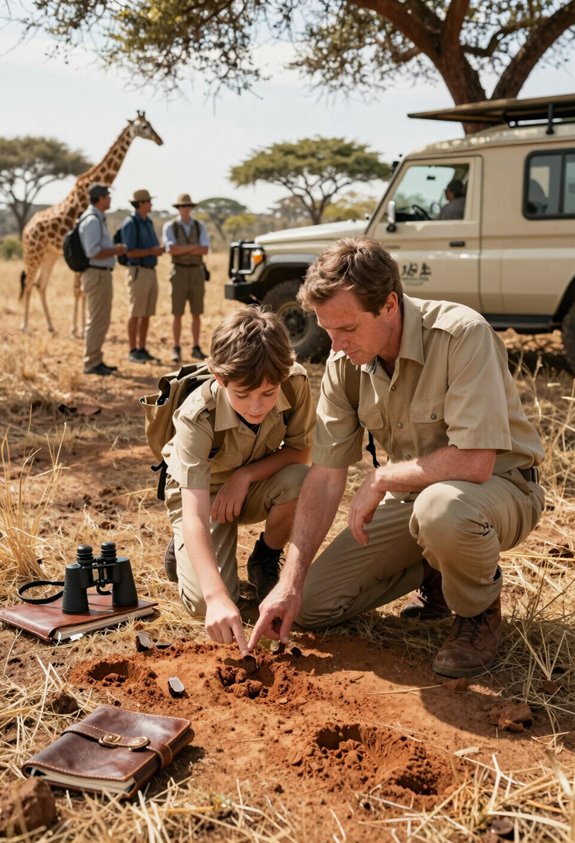
Why might someone choose to spend weeks in the Eastern Cape learning to track wildlife, identify birds by call, and navigate the ethical complexities of guiding visitors through protected land?
This program suits aspiring guides and career-changers seeking the FGASA Level 1 Apprentice Field Guide qualification—an accredited credential earned through intensive practical and theoretical study.
It’s equally valuable for conservation-minded volunteers who want hands-on wildlife monitoring and data collection experience on a 6,000-hectare private reserve.
Participants commit to 2–12+ weeks, though most stay 3–4 weeks, following a structured itinerary: weeks three through seven focus on field duties, lectures, and self-study, culminating in a formal assessment during week eight.
Those comfortable with shared dorm accommodation, communal meals, and supported learning environments will find the experience both rigorous and rewarding.
What the FGASA Level 1 Field Guide Qualification Offers
Every week of preparation on the reserve builds toward a single milestone: earning the FGASA Level 1 (Apprentice Field Guide) qualification, a nationally recognised credential that certifies graduates as accredited field guides capable of leading visitors through protected wilderness and contributing to conservation management.
This foundational certification comes through an intensive eight-week course that blends practical bush skills with theoretical understanding across ecology, geology, weather patterns, and astronomy—all assessed at the program’s conclusion.
Trainees work across 6,000 hectares of private game reserve, where supervised duties include wildlife monitoring and data collection that directly support local conservation efforts.
The Level 1 qualification doesn’t just mark completion; it opens pathways to higher-level guiding certifications while establishing graduates as professionals equipped to lead guided activities with competence and care.
How the 8-Week Field Guide Course Works
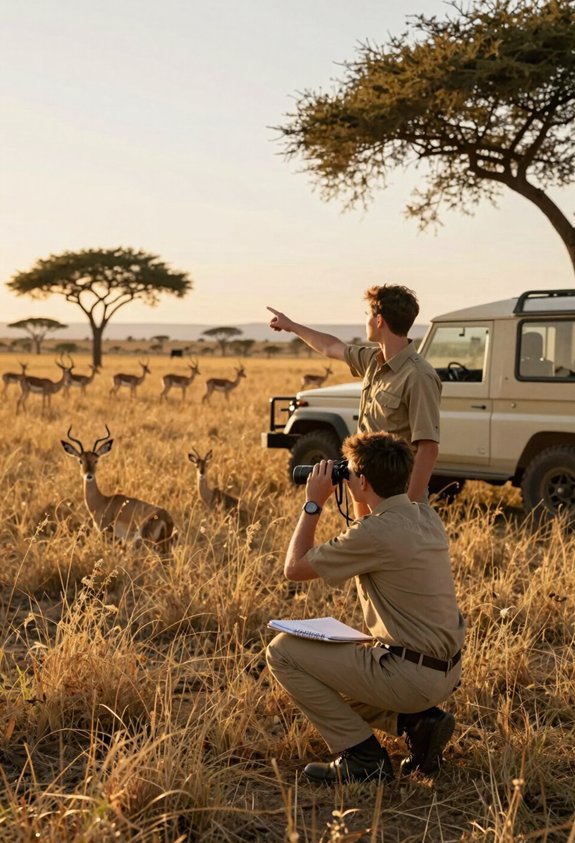
Earning the FGASA Level 1 credential isn’t a matter of passive attendance—it’s an active, structured journey through eight distinct weeks, each designed to layer practical experience onto theoretical knowledge until both merge into professional competence.
Week one brings arrival and orientation on the 6,000-hectare reserve, offering immediate exposure to the bush environment.
Week two introduces formal curriculum modules: geology, weather patterns, ecology—the study of organism interactions—and astronomy.
Weeks three through seven balance volunteer conservation duties with guided lectures and self-study, allowing participants to collect wildlife monitoring data while refining their skills.
Week eight delivers the formal assessment, testing both practical abilities and theoretical understanding before awarding the Apprentice Field Guide accreditation.
Shared dorms, three daily meals, weekends free for exploration, and 24/5 emergency support provide structure throughout.
Can You Join for 2, 4 or 12 Weeks Instead?
What if eight weeks feels too long—or perhaps too short—for your particular timeline and ambitions? The program accommodates different needs: a two-week stay offers a genuine taste of reserve life and hands-on exposure, though it’s too brief to complete the FGASA Level 1 assessment.
Four weeks—a popular choice—provides substantial practical experience, yet it typically won’t cover the full eight-week training and assessment cycle required for accreditation.
To earn FGASA Level 1 certification, volunteers must commit to the complete eight-week course: seven weeks of instruction and fieldwork, followed by a final assessment week.
Those who stay twelve weeks gain extended wildlife monitoring duties, deeper immersion in daily operations, and extra time for weekend excursions or self-directed study beyond the formal curriculum.
Week-by-Week Breakdown of Your Field Guide Training
Once a volunteer has chosen the full eight-week commitment, the training unfolds in a carefully paced sequence that balances immersion with instruction.
The first week delivers practical exposure—hands-on vehicle handling, tracking techniques, and basic bushcraft—across the 6,000-hectare reserve, allowing newcomers to absorb the rhythms of daily fieldwork.
Week two shifts toward theory, introducing ecology, geology, weather patterns, and species identification that form the FGASA Level 1 syllabus.
Weeks three through seven blend volunteer duties—wildlife monitoring and data collection—with guided lectures, skills practice, and self-study modules, building the competence required for independent guiding.
Week eight serves as the assessment period, testing both practical ability and theoretical understanding.
Throughout, weekends remain free for organized trips to Port Elizabeth or Grahamstown, with meals and shared single-sex accommodation provided on-site.
Classroom Theory: Ecology, Geology, Astronomy and Weather
Because guiding demands more than naming animals along a track, the classroom theory modules ground participants in the ecological, geological, astronomical, and meteorological systems that shape the reserve and inform every interpretive moment in the field.
Ecology lessons walk through trophic levels—energy flowing from grasses through antelopes to predators—and explain why roughly 90% is lost at each step, limiting how many lions a landscape can support.
Geology sessions trace soils back to ancient Cape Supergroup and Karoo sedimentary rocks, showing how nutrient-poor sands versus richer alluvial pockets dictate where browsers and grazers concentrate.
Astronomy practicals teach finding true south by extending the Southern Cross’s long axis 4.5 times, while weather modules clarify summer thunderstorms, winter coastal fronts, and annual rainfall gradients from 200 to over 800 millimeters across the Eastern Cape.
Practical Bush Skills You’ll Learn in the Field
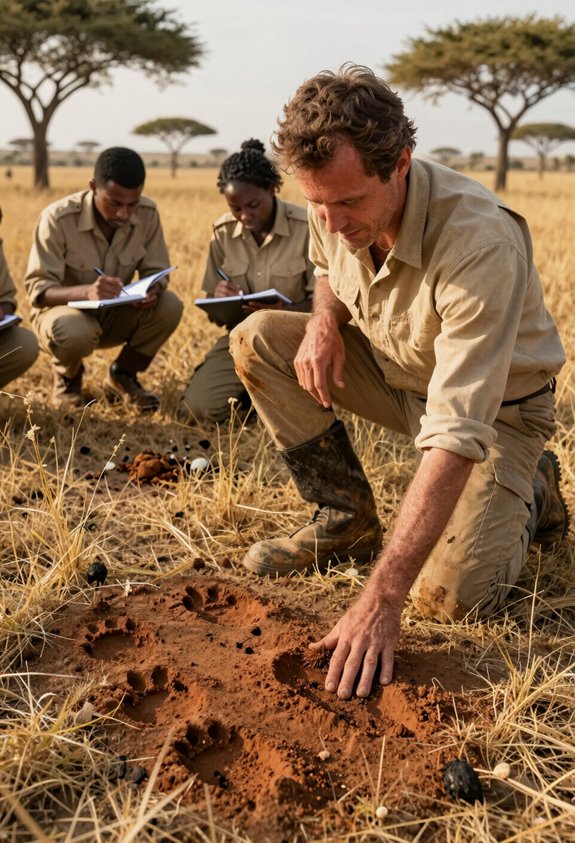
While the classroom lays the conceptual foundation, the real transformation happens when participants step into the veld with experienced mentors and begin translating theory into the tactile, sensory work of tracking, traversing, and reading the land.
They learn to identify spoor—footprints and signs left by animals—distinguishing impala from kudu by toe count and stride length, and estimating how recently a lion passed by examining substrate moisture and wind erosion.
Navigation becomes second nature through compass bearings, GPS waypoints, and pace-counting across 6000 hectares.
Vehicle-based skills include safe 4×4 handling and ethical wildlife approach distances. Radio protocols, bushcraft knots, firecraft, and remote first aid—bleeding control, fracture stabilization, heat exhaustion response—round out the practical repertoire, alongside interpreting animal behavior and body language for guest safety.
Your Wildlife Monitoring and Data Collection Duties
Translating field skills into meaningful conservation outcomes requires participants to become disciplined observers and meticulous recorders, gathering the data that transforms anecdotal sightings into actionable intelligence for reserve managers, researchers, and anti-poaching teams.
During morning and evening patrols, volunteers conduct systematic game counts—recording species, individual numbers, age and sex classifications where possible, and GPS coordinates that feed directly into population trend analyses. They’ll set, check, and maintain camera traps and spoor transects (paths monitored for animal tracks), logging deployment times and locations to capture evidence of elusive or nocturnal species.
Each sighting or sign—tracks, scats, carcasses—demands standardized data sheets noting behavior, distance, habitat type, and weather conditions, while human-wildlife conflict incidents, fence breaches, or poaching evidence require photographs, exact locations, and immediate escalation to management for rapid response.
What to Expect During Your Week 8 Assessment?
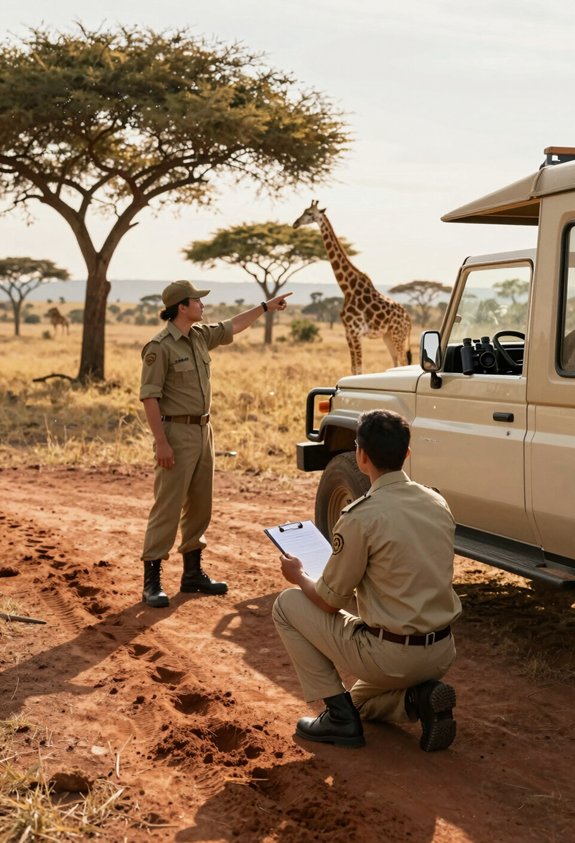
How does seven weeks of immersive field training culminate in a credential that carries weight across Africa’s wildlife industry? Week 8 transforms preparation into proof through the formal FGASA Level 1 assessment period—a rigorous evaluation combining practical field demonstrations with written theory exams.
Trainees navigate scenario-based practicals that mirror authentic guiding situations: vehicle-based game drives, walking safaris, spoor identification, and species interpretation alongside safety protocols and guest handling techniques. Evaluators observe route planning decisions, emergency procedures, and natural history explanations covering ecology, geology, weather patterns, and navigation.
The assessment also reviews wildlife monitoring skills—data collection methods, record-keeping accuracy, and adherence to reserve protocols developed throughout the course. Successful completion yields recognized guiding credentials, allowing graduates to return home as accredited Level 1 field guides ready for professional placement.
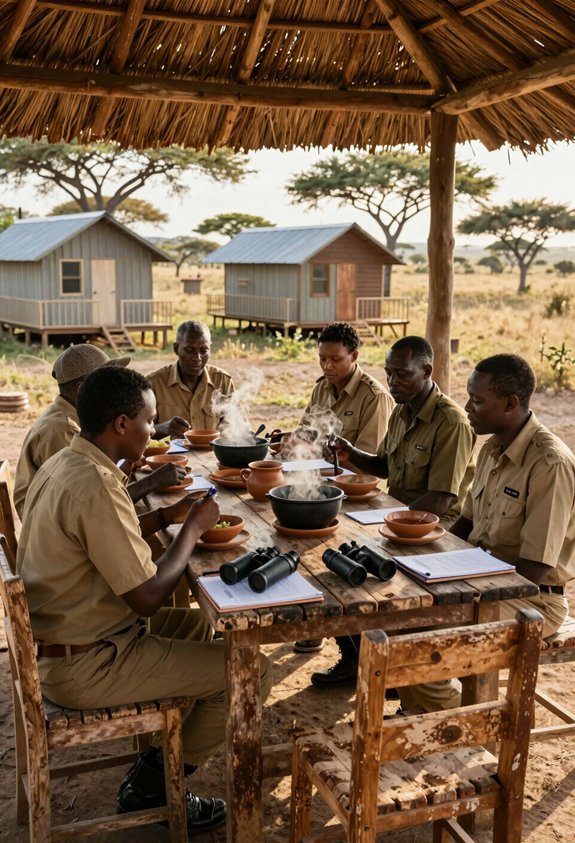
Living conditions at the reserve reflect the practical demands of field training—shared accommodations that balance simplicity with comfort, fostering the kind of close-knit community essential to intensive learning in remote environments.
Volunteers stay in single-sex camp dorms situated directly within the 6,000-hectare private game reserve, ensuring immediate access to the landscapes they’re studying.
All placements operate on an all-inclusive basis: accommodation and three daily meals are confirmed before departure, eliminating uncertainty about basic needs.
On-site staff prepare food that blends Western-style dishes with South African delicacies, offering variety throughout extended stays.
The camp provides communal amenities—a library for quiet study, a swimming pool for relaxation—that support volunteers staying anywhere from two weeks to several months, creating shared spaces where training and community life naturally converge.
You’ll get $100 off automatically, and by adding the additional code ELI100 at checkout, you can save an extra $100, for a total of $200 off your Global Work & Travel wildlife internship adventure.
Ready to volunteer or intern abroad? Enter code ELI100 at checkout and get $100 OFF any internship or volunteer project worldwide.
Explore ProjectsWeekend Activities and Trips to Port Elizabeth
Between scheduled training sessions, the programme builds in regular weekend breaks that invite volunteers to step away from the reserve and explore the broader Eastern Cape region, with organized trips to Port Elizabeth and nearby Grahamstown included as part of the standard placement itinerary.
The Global team coordinates these excursions, arranging transport and helping participants plan social meet-ups that connect them with local towns and fellow volunteers.
Port Elizabeth—the same city where arrival flights land—becomes a familiar destination throughout the placement, offering opportunities to experience urban South African culture, shop for supplies, or simply rest in a different setting.
These weekends aren’t afterthoughts; they’re structured intervals designed to balance intensive fieldwork with meaningful exploration, ensuring volunteers return to the reserve refreshed and ready to continue their training.
Best Time of Year to Join the Field Guide Course
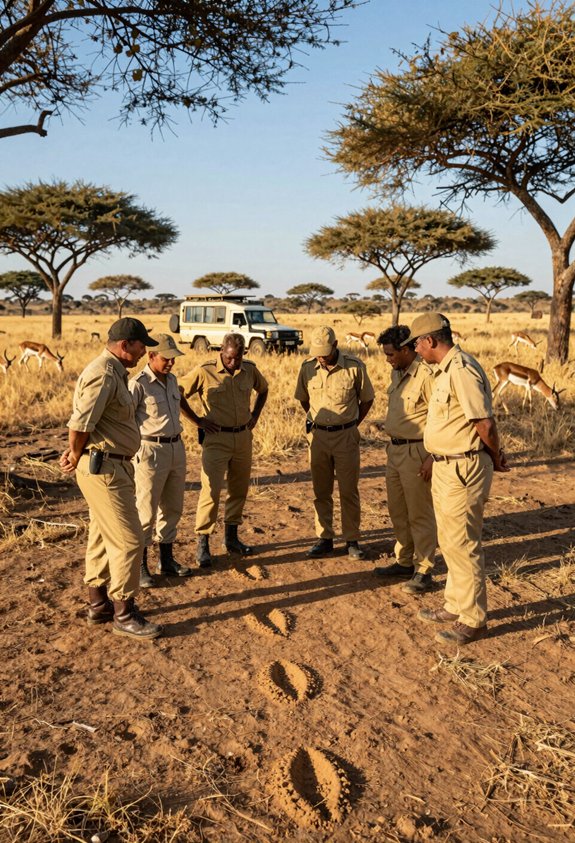
After mapping out weekends in Port Elizabeth and settling into the rhythm of reserve life, many prospective volunteers naturally ask when, exactly, they should book their placement—because timing shapes not only the comfort of daily game drives but also the quality of tracking practice, the visibility of wildlife, and even the difficulty of the FGASA Level 1 assessment itself.
April through October delivers autumn-to-winter conditions: lower rainfall, thinner vegetation that makes animals easier to spot, and daytime temperatures hovering between 18 and 26°C, though early-morning drives in June, July, and August can drop to 5–10°C and require warm layers.
The shoulder months—April, May, September, and October—offer drier skies for field assessments while avoiding midsummer storms, and September through November adds migratory birds plus newborn ungulates that enrich ecological lessons.
Program Costs and What Your All-Inclusive Fee Covers
Because transparency around cost is one of the first questions volunteers raise when they weigh the logistics of an eight-week field-guide program thousands of miles from home, it’s worth spelling out exactly what the all-inclusive fee delivers—and what it doesn’t.
The package covers guaranteed placement, shared single-sex dorm accommodation on the private reserve, three Western-style and South African meals daily, course tuition for the FGASA Level 1 Apprentice Field Guide qualification, practical field training, lectures, the Week 8 assessment, arrival transfer from Port Elizabeth Airport, on-site logistics, ongoing local support, amenities like the library and pool, pre-departure assistance, gWorld app access, weekend excursions, and a 24/5 emergency line.
Cancellation terms—including a 50% fee for cancellations made with 84 days’ notice—apply under the booking policy.
How Your Volunteer Work Supports Conservation Efforts
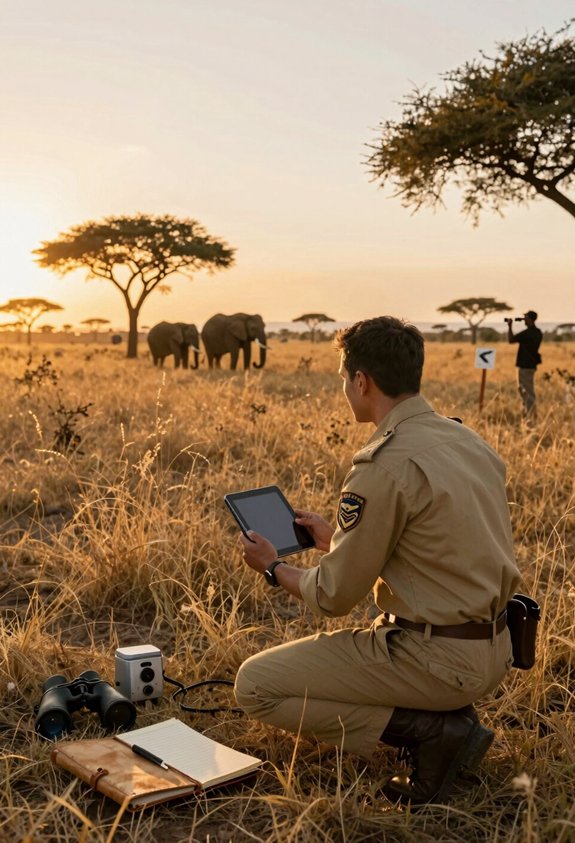
Living and working on a 6,000-hectare private game reserve means that every tracking session, species count, and habitat observation volunteers complete becomes part of a larger network of data—information that reserve managers rely on to make informed decisions about wildlife protection, habitat restoration, and anti-poaching strategies.
During weeks three through seven, volunteers contribute systematic field data that feeds directly into conservation databases shared with local partners. The FGASA Level 1 course builds standardized survey and tracking skills, increasing the reserve’s overall capacity for effective ecological monitoring and patrols.
Theoretical modules covering ecology, weather patterns, and geology sharpen volunteers’ ability to interpret environmental trends and report meaningful changes.
Career Opportunities After Earning Your FGASA Qualification
What comes next for volunteers who complete their FGASA Level 1 qualification often depends on how ready they’re to step into South Africa’s ecotourism industry—a sector that values practical field experience as much as formal credentials.
Graduates typically find work as apprentice field guides at private reserves and safari lodges throughout the Eastern Cape, leading game drives and bush walks while accumulating the supervised field hours required for advanced FGASA certifications.
Some enter conservation roles: wildlife monitoring positions with NGOs, research assistant posts on reserve teams, or support work within anti-poaching units that conduct ecological surveys.
Employers generally expect progression, so apprentices continue on-the-job mentoring and pursue additional modules—Field Guide or Trails Guide—that open up senior positions such as lead guide, head ranger, or lodge operations manager across South Africa’s recognized ecotourism network
Packing Lists, Fitness Requirements and Vaccinations
Although the prospect of packing for several weeks in the South African bush might seem intimidating at first, volunteers who approach their preparation with care find that a thoughtful, streamlined kit makes all the difference between comfort and distraction in the field.
Neutral-coloured, breathable clothing—three to five long-sleeve shirts, two to three pairs of cargo trousers, a warm mid-layer, and waterproof jacket—accommodates temperatures ranging from five degrees Celsius at dawn to thirty during midday.
Sturdy waterproof boots with ankle support, binoculars (8×42 recommended), headlamp, wide-brimmed hat, sunscreen SPF 30+, and insect repellent containing DEET remain essential.
Moderate fitness proves necessary: volunteers should comfortably walk five to ten kilometres across uneven terrain and lift ten to fifteen kilograms.
Routine vaccinations, Hepatitis A, and typhoid require updating before departure, while Eastern Cape reserves generally present low malaria risk.
Pre-Departure Cultural Orientation You’ll Receive
Before volunteers step onto the aircraft, they’ll receive a thorough pre-departure cultural orientation designed to smooth the adjustment from familiar routines at home to the rhythms of a working game reserve in South Africa’s Eastern Cape—a preparation that addresses not only what to pack in a rucksack but what to expect in daily interactions, mealtimes, and moments of uncertainty.
The orientation covers social norms and basic etiquette, introduces local cuisine and communal dining in single-sex camp dorms, and explains respectful wildlife behavior—how to approach animals, maintain appropriate noise levels, and honor private reserve rules.
Volunteers learn essential language tips for engaging with staff and nearby communities, and they’re briefed on ongoing support systems: the 24/5 emergency line and local partners who handle logistics and field cultural or safety concerns throughout their stay.
Getting From Port Elizabeth Airport to the Reserve
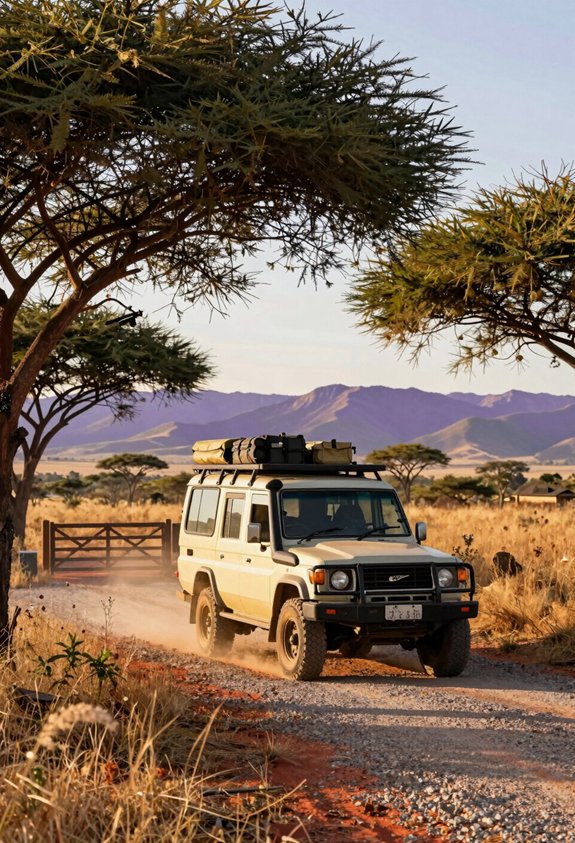
Once volunteers land at Port Elizabeth Airport, they won’t need to navigate unfamiliar transport options or negotiate taxi fares—the local partner arranges a dedicated airport pick-up that’s already included in the program fee, ensuring a straightforward transfer from the arrivals hall to the Eastern Cape reserve.
All essential details, including the exact meeting point, pickup time, and emergency contact numbers, are confirmed well before departure and made available through both the gWorld app and pre-departure documentation.
The program team manages every aspect of this logistics leg, removing the burden of coordinating independent travel. Should flight times shift unexpectedly or delays occur, volunteers can reach the Global team’s 24/5 emergency support line, allowing staff to adjust the airport transfer and maintain seamless arrival coordination.
24/5 Emergency Support and Wildlife Safety Protocols
Arriving safely at the reserve marks the beginning of a volunteer experience that relies on carefully structured protocols. Working alongside free-roaming wildlife—including elephants, lions, buffalo, and other potentially dangerous species—requires clear guidance and constant awareness of one’s surroundings.
On-site training delivers mandatory wildlife safety briefings that teach safe viewing distances, vehicle-based observation protocols, and correct behavior around potentially dangerous species.
Trained field rangers and the expert on-site team manage daily bush logistics and lead responses to wildlife incidents or medical emergencies.
A 24/5 emergency support line provides immediate assistance and coordination in crises. Thorough pre-departure orientation and on-reserve induction cover personal safety, anti-poaching awareness, night-time movement restrictions, and communication procedures for leaving camp—systems that have supported the program’s strong safety record since 2008.
How to Book Your Field Guide Course and Secure Your Spot
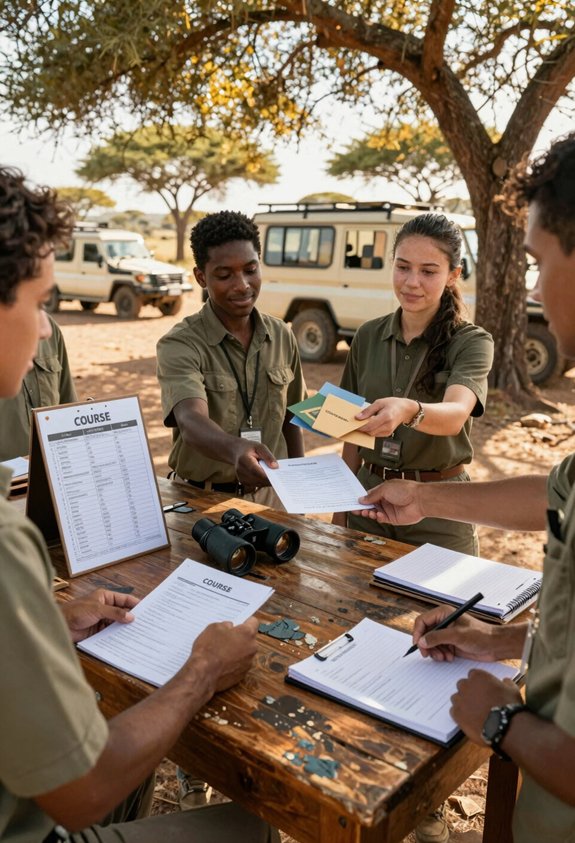
How does one move from imagining a field guide course in South Africa’s bushveld to holding a confirmed spot on a working game reserve—and what practical steps guarantee that the booking process aligns with personal timelines, budget, and the realities of shared accommodation, daily logistics, and emergency support?
The answer begins with understanding that placements are guaranteed once booked, removing uncertainty from the equation.
Early booking—first-in-best-dressed—secures preferred seasons and spots on the FGASA Level 1 Field Guide Course, which spans an 8-week assessment period though most volunteers join for 3–4 weeks.
Confirmation includes shared single-sex camp accommodation, three daily meals, and airport transport from Port Elizabeth to the 6,000-hectare reserve.
The gWorld app stores travel documents, while Global’s 24/5 emergency line provides backup, and flexible change policies allow trip transfers or holds.
Can You Transfer Your Trip or Get a Refund?
Life rarely follows a straight line, and the same unpredictability that makes fieldwork exciting can also interrupt carefully laid plans—so understanding what happens when circumstances shift isn’t pessimism but practical preparation.
If dates no longer work, participants can place trips on hold without penalty, preserving their opportunity rather than forfeiting it entirely. Alternatively, bookings can be transferred to different destinations or reassigned to friends or family members who might take their place.
Should outright cancellation become necessary, giving at least 84 days’ notice results in a 50% cancellation fee applied to the booking cost. Any remaining balance returns as Store Credit—valid for two years and usable toward other trips and services—rather than cash, which encourages continued exploration while acknowledging that plans sometimes require revision.
What the gWorld App Provides for Documents and Networking
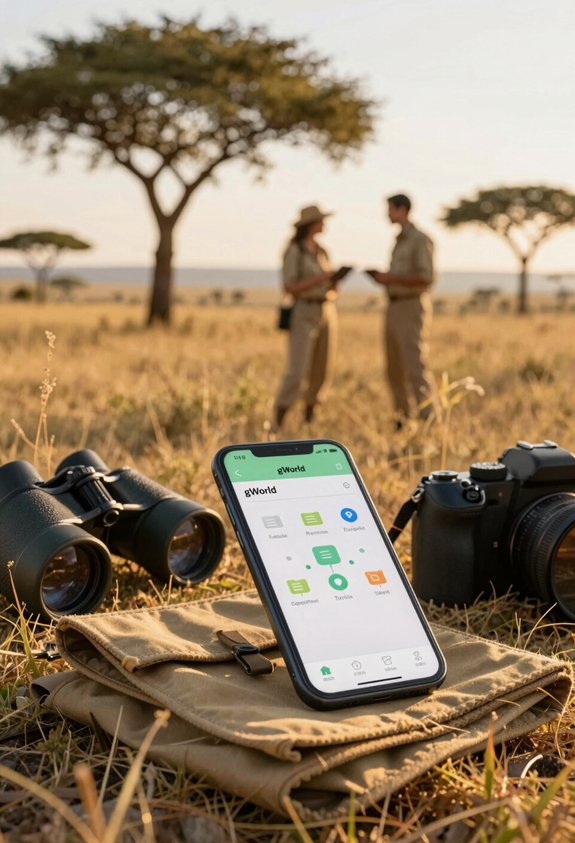
Where documents once traveled folded in pockets or buried in email threads, the gWorld app consolidates everything essential into one accessible place—a digital companion that doesn’t depend on stable Wi-Fi or cellular reception once information loads.
Tickets, booking confirmations, on-site addresses, and itinerary details remain available offline throughout a volunteer’s placement, ensuring vital information stays within reach even in remote field locations.
Emergency contacts and 24/5 support details connect directly to the program, offering quick reference when circumstances require assistance.
Beyond practical storage, the app’s networking features link volunteers with other Global travelers and on-site participants, creating opportunities to arrange meet-ups and exchange stories.
Marketplace deals, local activity suggestions, language-learning tools, and pre-departure resources round out the platform—practical support wrapped in community connection.
What Past Volunteers Say About Their Field Guide Experience
Tools and features matter only as much as the experiences they help shape, and for those who’ve completed the South Africa Field Guide Course, the lasting impressions center on transformation rather than logistics.
Past participants rate the program 4.7 out of 5, consistently describing it as life-changing—a phrase that appears again and again in reviews from volunteers who’ve fulfilled lifelong dreams on the 6000-hectare reserve.
They praise the balance between practical bushwork and classroom theory, the hands-on wildlife monitoring that grounds abstract concepts in real encounters, and the expert staff who make the FGASA Level 1 pathway genuinely accessible.
Many highlight storytelling skills gained through field sessions, the supportive local partners managing day-to-day training, and comfortable shared accommodation that lets them focus entirely on learning rather than survival.
If you’re exploring hands-on experience in ecology or wildlife biology, don’t miss my complete guide to wildlife conservation internships with global work and travel, where I break down what’s worth your time, money, and long-term career goals.
Ready to volunteer or intern abroad? Enter code ELI100 at checkout and get $100 OFF any internship or volunteer project worldwide.
Explore Projects
Erzsebet Frey (Eli Frey) is an ecologist and online entrepreneur with a Master of Science in Ecology from the University of Belgrade. Originally from Serbia, she has lived in Sri Lanka since 2017. Eli has worked internationally in countries like Oman, Brazil, Germany, and Sri Lanka. In 2018, she expanded into SEO and blogging, completing courses from UC Davis and Edinburgh. Eli has founded multiple websites focused on biology, ecology, environmental science, sustainable and simple living, and outdoor activities. She enjoys creating nature and simple living videos on YouTube and participates in speleology, diving, and hiking.
For your next application
Keep applying and hearing nothing back?
The Biology Job Application Kit shows you which stage of your applications is failing and how to fix it. 46 guides, 22 editable templates, an application tracker and an ATS CV Creator licence.
See the Job Application Kit