
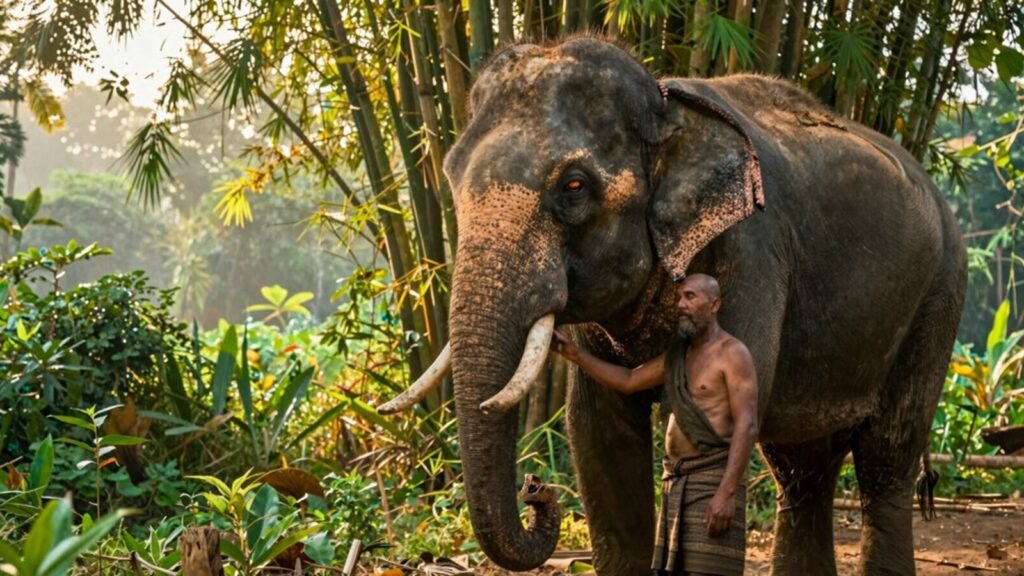
Volunteers in Chiang Mai work directly with rescued elephants by preparing 150–300 kilograms of daily fodder, chopping banana stems and sugarcane, harvesting jungle vegetation, and building enrichment items that restore natural behaviors suppressed by logging and street begging.
Part of my complete guide to elephants, which covers all three species, the trunk, movement, tusks, breeding, herd life and conservation, with sources.
Programs typically run two to twelve weeks, with the first week at the rescue center followed by placement in Karen hill-tribe jungle sites where volunteers trek with indigenous guides, maintain mud wallows, and support rehabilitation through hands-on care—and the details below explain exactly how each phase unfolds.
Why Chiang Mai Elephant Rescue Needs Volunteers
The reality behind rescued elephants in Chiang Mai is both sobering and urgent: these animals arrive at sanctuaries bearing the physical and psychological scars of years spent in illegal logging operations, street begging circuits, and exploitative tourist camps where they’ve been forced to give rides, perform tricks, or stand chained for photos.
Volunteers address this crisis through labour-intensive daily work that sanctuaries can’t afford to hire out—chopping hundreds of kilograms of pumpkins and bananas, constructing mud wallows for skin therapy, harvesting jungle forage, and building enclosures.
This hands-on care accelerates rehabilitation by reducing trauma and improving nutrition, while volunteer program fees directly fund veterinary treatment, habitat restoration, and anti-poaching patrols. Without consistent volunteer support, rescue centres would lack both the workforce and financial resources to sustain operations.
You’ll get $100 off automatically, and by adding the additional code ELI100 at checkout, you can save an extra $100, for a total of $200 off your Global Work & Travel wildlife internship adventure.
Understanding Your Role at the Rescue Centre
Once a volunteer commits to supporting this work, the next question becomes what the days at the sanctuary will actually look like—and the answer centres on direct, physical involvement in the elephants’ care.
Daily hands-on duties typically include preparing elephant food—banana stems, sugarcane, vegetables—and harvesting jungle forage to meet each animal’s dietary needs.
Volunteers also help construct and maintain mud pits and enrichment features used in rehabilitation, encouraging natural bathing and skin care behaviors for rescued elephants.
Physical labour such as moving heavy food, building fences or shelters, and site maintenance is routine, so the programme requires volunteers able to undertake laborious duties. All volunteers receive on-site orientation and training with project coordinators before starting tasks, and work under supervised shifts to safeguard animal welfare and volunteer safety.
Week One: Hands-On Work at the Chiang Mai Facility
Arriving at the Chiang Mai Rescue Centre marks the beginning of an intensive, physically engaged week—one that prioritizes direct involvement in elephant care over observation or classroom learning.
Volunteers complete orientation and training before starting hands-on duties to help rescued elephants rehabilitate.
Daily tasks typically include preparing and chopping bulk jungle food, harvesting browse—edible branches and leaves—from nearby areas, and making nutritious food mixes for the herd.
Practical work also involves preparing mud pits and wallows, basic construction and maintenance of enclosures, and building enrichment items to stimulate natural elephant behaviour.
Volunteers live in shared project accommodation with three vegetarian meals provided, supervised on-site by experienced staff throughout the week.
The schedule is physically demanding: participants should be prepared for manual labour, outdoor work in tropical conditions, and shifts balanced with short orientation briefings.
Your Karen Hill Tribe Jungle Placement
From Week Two onward, volunteers move from the rescue centre to a Karen hill tribe jungle placement—a shift that deepens immersion in both elephant rehabilitation and indigenous culture.
Participants live in shared, comfortable project housing near the jungle, where three vegetarian meals arrive daily and physical labor defines the rhythm of work.
Tasks include preparing food and enrichment for rehabilitating elephants, harvesting jungle vegetation, maintaining mud pits, and undertaking basic construction that supports ongoing care.
At least one guided jungle hike allows volunteers to observe forest elephants in the wild alongside Karen trackers, blending rehabilitation with monitoring efforts.
Many also teach English at the local school or join awareness initiatives that advance animal rights and community upliftment, contributing meaningfully to Karen development while learning indigenous perspectives on coexistence.
Daily Elephant Care Tasks and Feeding Routines
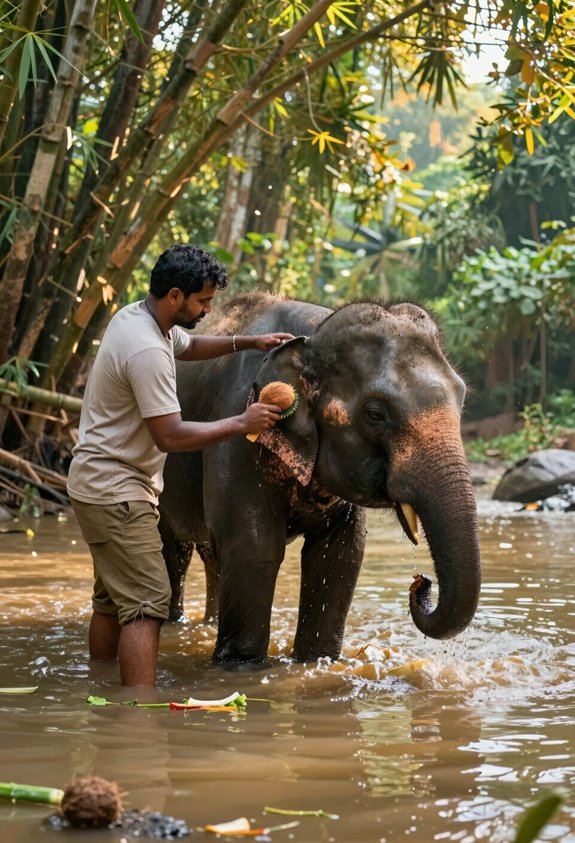
Each morning at the jungle placement, volunteers rise early to begin harvest and preparation work that will supply the day’s browse piles—massive collections of fresh vegetation assembled to meet the appetite of animals who, in the wild, would spend up to eighteen hours foraging across vast territories.
Adult Asian elephants consume 150–300 kilograms of fodder daily, so volunteers chop banana stems, bundle sugarcane, and gather grasses in quantities sufficient for multiple feeding rounds: early morning, late afternoon, and occasionally a midday snack.
Between meal times, they prepare enrichment items—fruit-filled logs, suspended treats, molasses blocks—that encourage natural problem-solving behaviors. Care tasks also include recording each elephant’s intake and behavior, noting appetite shifts or injuries, and maintaining mud wallows and water points, since bathing follows feeding and supports thermoregulation and skin health.
Guided Jungle Treks to Observe Wild Elephants
After several days spent mastering the rhythms of feeding schedules and caregiving routines, volunteers relocate to a Karen hill-tribe jungle site where the focus broadens from structured elephant care to observation of these animals within the forest environment they’ve evolved to inhabit.
Local Karen guides and project coordinators lead these treks, ensuring volunteers can safely observe forest elephants while learning about behaviour patterns and rehabilitation principles that support sustainable rescue efforts.
Most itineraries guarantee at least one dedicated jungle hike for elephant observation, and each trek integrates conservation goals with experiential learning.
Before heading into the forest, volunteers receive orientation covering safety protocols, respectful viewing practices—maintaining appropriate distance without disturbing natural behaviours—and cultural context regarding the community’s relationship with elephants.
Teaching English at Schools Near the Project
Teaching English at local schools represents a deliberate extension of the volunteer project’s conservation mission—one that recognizes sustainable elephant welfare depends not only on direct animal care but also on empowering the communities who share the forest with these rescued herds.
During the second half of their placement, volunteers work with Karen hill tribe children, delivering lessons coordinated by the local partner and woven seamlessly into itineraries that already include jungle duties and elephant work.
Most participants receive on-site orientation before entering classrooms, ensuring their teaching remains culturally appropriate and genuinely effective.
These English sessions support broader animal-rights education—teaching young community members why elephants matter and how protecting them benefits everyone. Gap-year volunteers and those staying two to twelve weeks all contribute meaningfully, with local supervision provided throughout.
Is This Elephant Volunteer Program Right for You?
Because not every traveler arrives in Thailand seeking the same experience, this elephant volunteer program makes no pretense of universal appeal—it openly targets individuals willing to trade comfort for conservation impact, daily routines for demanding physical labor, and tourist observation for genuine participation in rehabilitation work.
The program explicitly requires volunteers aged 18–85 who possess physical fitness, since tasks include preparing elephant food, clearing jungle vegetation, and constructing mud pits under tropical heat.
Those expecting passive wildlife encounters will find themselves mismatched; instead, placements lasting two to twelve weeks demand consistent effort, with most volunteers committing three to four weeks to balance orientation, skill development, and meaningful contribution.
If someone seeks hands-on conservation coupled with community outreach—teaching English, promoting animal-rights education—and accepts strenuous conditions, this project offers substantive impact rather than superficial tourism.
How Long to Volunteer With Elephants in Chiang Mai?
How long should someone commit to an elephant volunteer placement in Chiang Mai?
Most programs run from two to twelve or more weeks, with typical volunteers staying three to four weeks—enough time to complete orientation, spend about a week at the rescue centre preparing food and maintaining mud pits, then move to jungle placements among Karen Tribe communities.
To experience both environments fully, plan for at least two to three weeks.
Longer commitments of six to twelve weeks allow deeper engagement: volunteers contribute to rehabilitation projects, construction work, and community education efforts that create measurable impact over time.
Since these placements require physical stamina and advance planning, prospective volunteers should ideally book six to twelve months ahead for flexible scheduling.
Best Months for Elephant Volunteer Work in Chiang Mai
Once a volunteer has settled on a suitable length of stay, the next question becomes which months offer the most productive and comfortable conditions for elephant work in northern Thailand.
November through February stand out as ideal—these cool, dry months bring average highs of 26–30°C and minimal rainfall, making physical tasks like preparing food and mucking enclosures far less taxing.
March and April remain workable despite soaring temperatures of 33–39°C, though volunteers should prepare for fatigue during manual duties.
The monsoon season from June to September, peaking in July and August, presents the greatest challenges: heavy rains turn jungle trails into mud, occasionally restricting access to habitats and rescue centres. For prime wildlife observation and safe trekking, the dry window of November through April delivers the clearest visibility and most reliable conditions.
Accommodation and Meals During Your Volunteer Trip
After settling questions of timing and duration, most volunteers turn their attention to the daily rhythms of life at the rescue centre—where they’ll sleep, what they’ll eat, and how those practical details fold into the larger experience.
Upon arrival at Chiang Mai Airport, volunteers are met and transferred to an initial hotel for one night before moving to their placement accommodation.
For the remainder of the program, they stay in shared, project-based housing located near the rescue centre and jungle sites, where the work unfolds. Three vegetarian meals arrive daily, prepared by project staff who draw from local culinary traditions and adapt dishes to suit volunteers. The accommodation and meals come through a screened local partner, forming part of an all-inclusive package that supports the entire on-site experience.
What’s Included in Your Elephant Volunteer Trip Fee
The volunteer trip fee gathers together a wide range of practical supports and programmatic elements, each one designed to ease the adjustment from home to placement and sustain volunteers throughout their time at the rescue centre.
Pre-departure support, placement confirmation, and a dedicated Trip Coordinator are included to organise project-specific information and cultural orientation.
Airport transfers from Chiang Mai to initial accommodation, plus all onward transport to project sites, remove logistical uncertainty.
Comfortable shared lodging and three vegetarian meals daily—prepared by project staff—provide nourishment and rest.
On-site supervision, initial training, ongoing local support, and excursions such as jungle hikes and rescue-centre activities enrich the experience. Importantly, fees contribute directly to elephant rescue, rehabilitation efforts, and local education initiatives, sustaining both animal welfare and community development over time.
Flights, Insurance, and Extra Costs to Budget For
While the volunteer trip fee covers much of the in-country experience—transfers, lodging, meals, and project work—several essential costs fall outside this framework and require separate planning.
International flights to Chiang Mai aren’t included, so booking six to twelve months ahead secures lower fares for trips spanning two weeks to several months.
Extensive travel insurance is mandatory and typically separate: policies must explicitly cover volunteering, animal handling, jungle trekking, and emergency evacuation.
Budget also for visa fees, required vaccinations, and a criminal background check—administrative expenses that vary by nationality.
Although three vegetarian meals daily are provided, volunteers need spending money for souvenirs, off-site excursions to markets or waterfalls, and personal items.
A Travel Concierge service may assist with arrangements but warrants price comparison first.
Airport Transfers and Getting to Your Placement
How does a volunteer cross that final threshold from international arrival to living quarters tucked beside a sanctuary or deep in hill-tribe forest? A vetted driver meets arrivals at Chiang Mai Airport, providing the first transfer to an initial hotel—a service arranged as part of the trip fee.
On Day 2, the project team organizes onward transport to volunteer accommodation, incorporating a meet-and-greet and orientation with local coordinators who explain pickup schedules, luggage limits, and approximate travel times to jungle sites.
All subsequent transfers between the Chiang Mai Rescue Centre and Karen Tribe placements are coordinated by local partners, eliminating the need for independent arrangements. Volunteers simply confirm their flight details with their Trip Coordinator before departure, then trust the established logistics to unfold with minimal delay or risk.
What to Pack for Elephant Volunteer Work
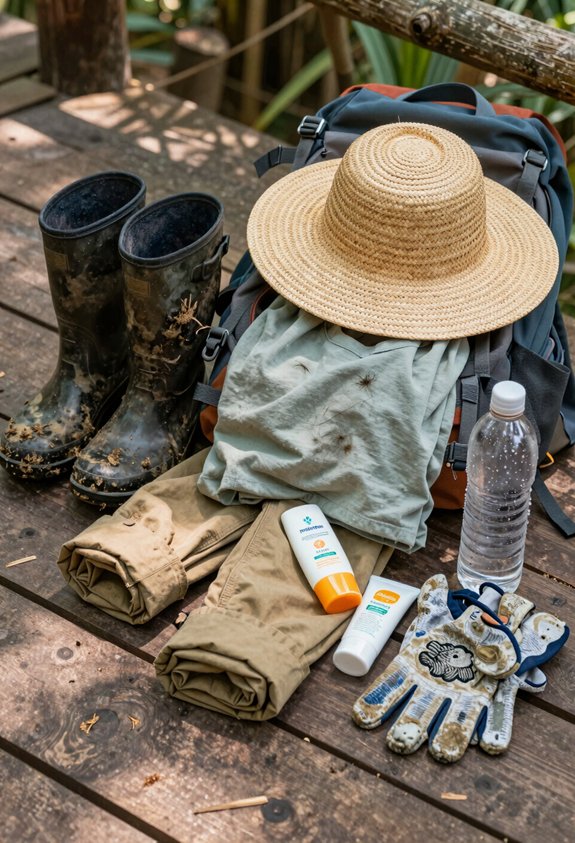
A backpack’s contents can spell the difference between discomfort and readiness when days unfold in elephant sanctuaries where mud, heat, and sudden rain converge without warning.
Volunteers should pack sturdy, closed-toe waterproof boots with ankle support alongside old trainers for daily tasks—food preparation, digging mud pits, jungle hikes.
Three to five sets of lightweight, quick-dry long-sleeve shirts and trousers protect against sun, mosquitoes, and rough vegetation during two-to-four-week placements.
A rain jacket or poncho proves essential for tropical downpours, while strong work gloves and a headlamp with spare batteries support varied tasks.
High-SPF sunscreen and DEET-based insect repellent (20–50% concentration) defend against environmental hazards, and a reusable water bottle maintains hydration.
Photocopies of passport documentation, a basic first-aid kit, and Thailand’s Type A/C power adapter complete practical preparations.
Safety Measures and On-Site Support in Chiang Mai
Packing smart prepares volunteers for the physical environment, but understanding the framework of support around them addresses the equally important question of who watches over their wellbeing once they arrive.
From the moment volunteers land at Chiang Mai Airport, a driver waits to provide transfer to initial hotel accommodation—a chance to rest before placement begins.
All partner organizations undergo screening and vetting, ensuring reliability at every site.
Once placement starts, volunteers receive in-country orientation and on-site training before hands-on elephant work commences.
Daily logistics—accommodation, three vegetarian meals, supervision—are managed by local teams familiar with the terrain.
A 24/5 emergency support team and Trip Coordinator remain available throughout, with standby assistance covering weekdays, creating multiple layers of oversight designed to address concerns as they emerge.
How to Book Your Elephant Volunteer Experience
Turning preparation into action requires just a few deliberate steps, each designed to move a volunteer from interest to confirmed placement without unnecessary complication. Begin by selecting the Chiang Mai elephant volunteering trip and securing a spot with a small, flexible deposit—or choose the “Book Now, Decide Later” option, which provides up to twelve months to confirm specific dates.
Next, schedule a meeting with a dedicated Trip Coordinator, a travel professional who’ll organize placement details, airport transfer upon arrival, accommodation, and pre-departure paperwork. Plan six to twelve months ahead for popular dates, as most volunteers commit to three-to-four-week programs.
Before final payment, confirm that local supervision, training, and emergency support are included, ensuring a safe and well-structured experience from start to finish.
Ready to volunteer or intern abroad? Enter code ELI100 at checkout and get $100 OFF any internship or volunteer project worldwide.
Explore ProjectsIf you’re exploring hands-on experience in ecology or wildlife biology, don’t miss my complete guide to wildlife conservation internships with global work and travel, where I break down what’s worth your time, money, and long-term career goals.

Erzsebet Frey (Eli Frey) is an ecologist and online entrepreneur with a Master of Science in Ecology from the University of Belgrade. Originally from Serbia, she has lived in Sri Lanka since 2017. Eli has worked internationally in countries like Oman, Brazil, Germany, and Sri Lanka. In 2018, she expanded into SEO and blogging, completing courses from UC Davis and Edinburgh. Eli has founded multiple websites focused on biology, ecology, environmental science, sustainable and simple living, and outdoor activities. She enjoys creating nature and simple living videos on YouTube and participates in speleology, diving, and hiking.
🌿 Explore the Wild Side!
Discover eBooks, guides, templates and stylish wildlife-themed T-shirts, notebooks, scrunchies, bandanas, and tote bags. Perfect for nature lovers and wildlife enthusiasts!
Visit My Shop →