
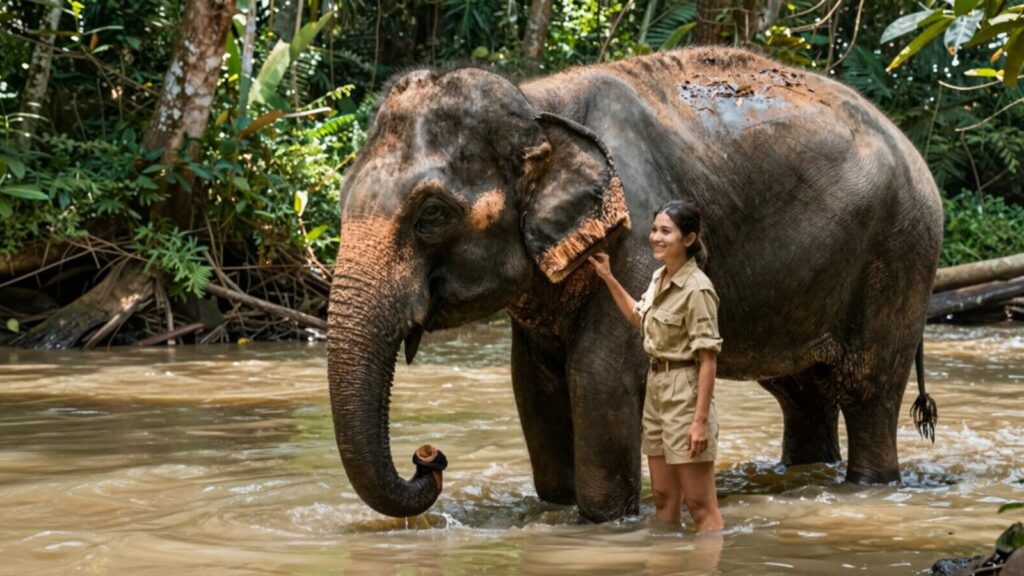
Internship with elephants in Sri Lanka combines structured fieldwork with hands-on conservation, where volunteers photograph individual elephants to build identification catalogs, record behavioral data across dry-zone forests and watering tanks, monitor human–elephant conflict zones along village edges, and inspect electric fences that protect crops—all supported by trained Local Field Scouts who guide daily tasks, while full-board Field House lodging, three meals, weekend breaks, and a 24/5 emergency line provide structure and safety throughout multi-day placements that require moderate fitness and age-specific eligibility confirmed before booking, with details on costs, deposits, cancellations, airport transfers, and post-placement travel options outlined further on.
Part of my complete guide to elephants, which covers all three species, the trunk, movement, tusks, breeding, herd life and conservation, with sources.
What an Elephant Internship in Sri Lanka Actually Involves
When someone chooses an elephant internship in Sri Lanka, they’re committing to a structured daily rhythm that divides fieldwork into two primary shifts: mornings from 09:00 to 12:00 and afternoons from 15:00 to 18:30, with the midday heat reserved for rest and data entry.
During these shifts, interns photograph elephants to build individual identification records, track movement patterns across the landscape, and construct behavioural ethograms—systematic catalogues of observed behaviours and social interactions. Much of this observation happens at tank monitoring sites, where elephants gather near reservoirs, and along an ancient corridor still used by herds today.
Interns also inspect electric fences and other conflict-mitigation infrastructure, documenting both aggressive and peaceful human–elephant encounters to refine local prevention strategies, all while working alongside Local Field Scouts who benefit from nature-based employment opportunities.
Who Should Apply for an Elephant Internship in Sri Lanka
Understanding the daily rhythm and responsibilities of elephant fieldwork naturally leads to the question of fit: not everyone thrives in conditions that combine long observation hours, communal living, and the physical demands of tropical field sites, so it’s worth considering honestly whether this particular internship aligns with one’s skills, expectations, and tolerance for structured routine.
Wildlife or conservation students and early-career researchers interested in elephant identification methods, movement tracking, and behavioral recording will find the program especially valuable.
Those comfortable with 06:00 starts, extended shifts monitoring tanks and corridors, and tasks like electric fence maintenance or camera-trap checks—alongside gendered dormitories and shared facilities—tend to adapt most successfully.
Prior experience isn’t required; organizations accept varying skill levels, though backgrounds in ecology, zoology, or fieldwork accelerate contribution to data collection and community-focused conservation outcomes.
Program Duration, Age Requirements, and Fitness Level
Because field conditions and daily schedules demand both physical stamina and mental readiness, potential interns should carefully assess whether the program’s time commitments and activity levels suit their circumstances before applying.
Placements operate as multi-day structured internships with weekday field duties—typical routines include early-morning birding sessions (06:00–07:30), extended monitoring blocks (09:00–12:00 and 15:00–18:30), and evening data entry, creating full days rather than abbreviated volunteer shifts.
Optional nocturnal activities, such as small wild cat surveys between 21:00 and midnight, can extend schedules further.
The role requires moderate fitness for sustained walking, station-based observation in tropical heat, and occasional manual tasks like fence maintenance or equipment handling.
Age minimums and exact stint lengths vary by trip, so candidates must confirm eligibility and duration options with their Trip Coordinator before departure.
What’s Included: Accommodation, Meals, and Support
Living comfortably in the field proves essential for sustaining focus during long monitoring shifts, so the program arranges full-board accommodation in a purpose-built Field House equipped to balance tropical conditions with everyday conveniences.
Gendered dorm rooms, communal spaces, western-style bathrooms with hot water, laundry facilities, and an infinity pool create a restorative base between fieldwork sessions.
Three daily meals—blending Sri Lankan and Western cuisines—accommodate vegan, vegetarian, and non-spicy preferences, ensuring dietary needs don’t complicate the experience.
Pre-departure confirmation of placement details, airport collection at Bandaranaike International, and first-night hotel transfers eliminate arrival uncertainties.
Throughout the stay, a dedicated Trip Coordinator and Personal Travel Concierge manage logistics while the partner organisation provides local guidance, supported by a 24/5 emergency line for urgent situations.
You’ll get $100 off automatically, and by adding the additional code ELI100 at checkout, you can save an extra $100, for a total of $200 off your Global Work & Travel wildlife internship adventure.
Ready to volunteer or intern abroad? Enter code ELI100 at checkout and get $100 OFF any internship or volunteer project worldwide.
Explore ProjectsCost Breakdown and Cancellation Policies
When evaluating the financial commitment required for this placement, it’s worth noting that the trip price bundles core essentials—vetted wildlife work, Field House lodging, three daily meals with dietary flexibility, laundry access, and pool use—into a single upfront cost, though flights and travel insurance remain separate expenses that participants arrange independently.
The booking structure favors flexibility: low deposits secure your spot, with options like the Lifetime Deposit Guarantee allowing you to swap, gift, or save your deposit indefinitely, while the “Book Now, Decide Later” pathway grants up to one year to finalize dates.
Cancellations made with 84 days’ notice incur a 50% fee, and refunds arrive as Store Credit—valid for two years and redeemable across trips, third-party tours, or DealsAway.com holidays—preserving value even when plans shift unexpectedly.
Your Daily Routine: Dawn Birding to Nocturnal Wildlife Studies
Beyond the logistics of booking and budgeting lies the heart of the experience itself—the rhythm of days spent observing, recording, and protecting Sri Lanka’s wildlife in real time. Interns wake before dawn for birding and checklist maintenance around the Field House from 06:00–07:30, with tea and coffee provided.
After breakfast and a group briefing (08:00–09:00), mornings involve hands-on fieldwork: tending butterfly sanctuaries, planting host species—plants that caterpillars feed on—and identifying species.
Afternoons split into two tracks: Team A monitors tanks and collects individual elephant identification data, while Team B observes human–elephant interactions from an ancient corridor Tree Hut.
Evenings are reserved for cleaning equipment and entering data (19:00–21:30), followed by communal dinner. Optional nocturnal shifts studying small wild cats run until midnight, using night-vision and thermal cameras for surveys and trap checks.
Elephant Research: Tracking, Identification, and Behavior Monitoring
Tracking individual elephants through Sri Lanka’s dry-zone forests and grasslands teaches interns the patient, cumulative work that underpins every conservation decision.
They photograph each animal’s unique markers—ear tears, tusk shape, scars—and log every sighting into growing ID catalogs that reveal movement histories across seasons.
Morning sessions from 09:00 to 12:00 and afternoon blocks from 15:00 to 18:30 often focus on tank monitoring: watching man-made reservoirs to record which herds drink where and when.
Interns use a standardized ethogram, a detailed list of behaviors, to document feeding, socializing, and aggression along ancient elephant corridors. Combined with remote cameras and occasional GPS data, these observations map home ranges and conflict hotspots, guiding electric-fence patrols and community-based solutions that reduce crop raiding while protecting both elephants and farmers.
Monitoring Human-Elephant Conflict at Ancient Corridors
The data gathered from tank monitoring and ID catalogs gains its deepest meaning when interns watch those same elephants navigate the narrow green corridors that connect feeding grounds to water, the ancient pathways now crossed by roads, farms, and village boundaries.
From a Tree Hut station each afternoon—usually 15:00 to 18:30—volunteers record every human–elephant encounter, classifying each interaction as aggressive or non-aggressive to map conflict patterns over time.
They photograph individual elephants, log movement and behavior into a citizen-science database, and help inspect electric fences around farms to prevent crop raiding.
Local Field Scouts join the work, trained to report conflicts in real time, turning monitoring into both community employment and rapid response—a practical answer to coexistence in shared landscapes.
Butterfly Habitat Restoration and Small Wild Cat Studies
While elephants move through corridors shaped by conflict and coexistence, volunteers also turn their attention to smaller, quieter residents whose survival depends on carefully restored pockets of native habitat.
Morning fieldwork from 09:00 to 12:00 involves weeding, planting native host plants—species that butterfly larvae need to feed and develop—and watering tender shoots to establish micro-habitats that reduce edge effects and support complete life cycles.
Volunteers record species sightings, compile identification checklists, and monitor plant–butterfly interactions to evaluate whether restoration efforts truly increase local abundance.
For those interested, optional nocturnal surveys from 21:00 to midnight use night-vision and thermal cameras to document small wild cats, deploying camera traps and checking them regularly. All data—butterfly IDs, plant health logs, camera images—feeds into citizen-science databases that inform habitat management and carnivore conservation strategies alike.
Field House Accommodation: Dorms, Amenities, and the Infinity Pool
After hours spent kneeling among butterfly-host plants or peering through thermal scopes in search of fleeting wild cats, volunteers return to a Field House that offers both respite and community, a place where tired muscles can unwind and shared experiences deepen the day’s work.
The gendered dorm rooms feature high roofs that catch cool breezes and help the structure blend into the landscape, while communal living areas encourage connection among participants.
Western-style bathrooms provide hot water for comfortable hygiene, and on-site laundry facilities keep clothes fresh throughout the stay.
Three meals arrive daily—vegan, vegetarian, and non-spicy options included—complemented by a tea and coffee station in the shared space.
Perhaps most welcome after fieldwork: an infinity pool integrated into the grounds, where volunteers can soak away fatigue and reflect on the day’s discoveries.
Meals and Dietary Options During Your Placement
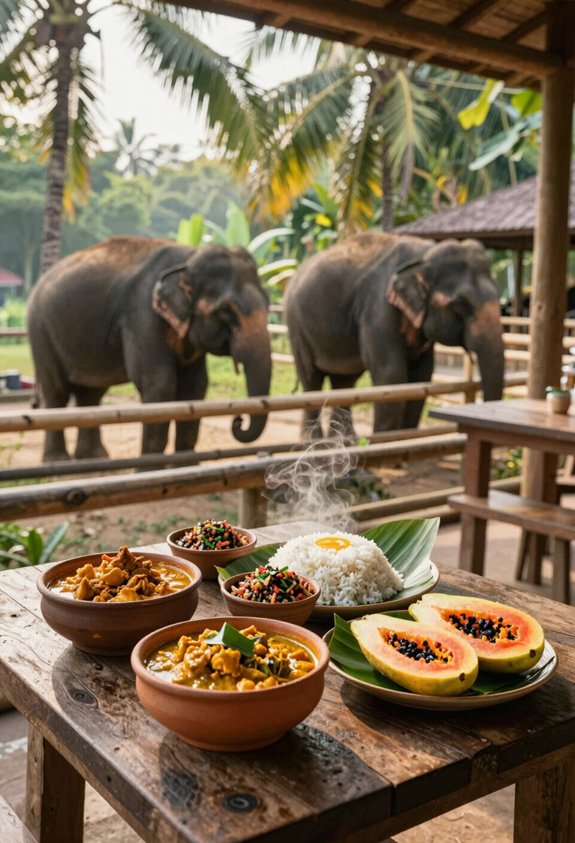
Daily, volunteers gather at long communal tables where freshly prepared meals arrive from the Field House kitchen, a rhythm that transforms eating into a shared ritual rather than mere sustenance.
Three times each day, on-site staff prepare dishes that blend Sri Lankan spices with familiar Western options, creating menus that honor both local tradition and international palates.
Tea and coffee remain available throughout waking hours, anchoring informal conversations between structured activities.
Dietary restrictions—whether vegan, vegetarian, or related to spice tolerance—receive accommodation when communicated during the pre-departure confirmation process, the administrative stage where placement details, housing arrangements, and meal preferences are finalized.
This advance notice allows kitchen staff to adjust ingredients and preparation methods, ensuring that each participant can engage fully in the program without concern over nutritional needs.
Working With Local Field Scouts and Conservation Teams
As volunteers settle into the daily rhythm of data collection and field observation, they discover that their most valuable teachers aren’t always the project directors or visiting researchers but rather the local Field Scouts—men and women recruited from villages that border the elephant corridors and trained in the specialized skills conservation work demands.
These Scouts lead fieldwork tasks: individual elephant identification, movement recording, human–elephant interaction monitoring. They’ve received capacity-building in data collection protocols, ensuring consistent behavioural ethograms—detailed catalogues of animal actions—and camera-trap deployment across projects.
Working alongside trained conservation teams and volunteers, Scouts maintain electric fences, monitor tank and corridor activity, and help run butterfly, bird, and small wild cat surveys.
This model creates sustainable, nature-based employment, paying Scouts for ongoing conservation duties and community outreach while their data feeds directly into long-term research and management plans.
How Your Work Supports Citizen Science and Local Communities
The daily observations volunteers record—each elephant’s trunk curve, the hour a bull visits a particular waterhole, the number of steps from forest edge to paddy field—become part of a larger citizen‑science framework that transforms individual effort into collective knowledge.
These standardized datasets—photographic IDs, GPS tracks, behavioural ethograms, and camera‑trap records—feed directly into ongoing research databases that inform conflict‑mitigation strategies and habitat‑management decisions.
Meanwhile, the programme creates paid employment for local Field Scouts and Assistants, who receive on‑site training in monitoring techniques and electric‑fence maintenance.
Revenue flows back through wages, training programmes, and tourism‑linked jobs, building sustainable livelihoods tied to protecting elephants.
Pre-Departure Planning and Airport Arrival in Colombo
Before stepping onto the aircraft, every volunteer receives confirmation that their placement, accommodation, and daily meals are already secured—a logistical foundation that removes guesswork and allows focus to shift toward packing field notebooks, reading elephant-identification guides, and mentally preparing for the weeks ahead.
A dedicated Trip Coordinator manages major details, while the Travel Concierge stands ready to arrange tailored flights and insurance, though these costs remain separate from the program fee.
Upon landing at Bandaranaike International Airport in Colombo, an arranged driver meets each arrival and provides transfer to a first-night hotel.
From there, the local team coordinates all subsequent movements to the Field House and project site, offering continuous in-country support alongside pre-departure instructions and emergency contact details that guarantee help is always accessible.
Booking Process: Deposits, Flexibility, and Guarantees
Once arrival logistics and in-country support have been confirmed, attention naturally shifts to the mechanics of securing a place on the program—a process designed to accommodate uncertainty while holding space for commitment.
Prospective participants can reserve their spot with a low deposit and benefit from a “Book Now, Decide Later” option that grants up to one year to finalize exact travel dates. Should plans change, a Lifetime Deposit Guarantee permits swapping, gifting, or saving that deposit for future trips.
Most travelers book six to twelve months ahead, after which a Travel Concierge assists with flight and insurance arrangements—neither included in the base price.
Cancellations made eighty-four or more days prior incur a fifty percent fee, returned as Store Credit valid for two years across other trips or partner programs.
24/5 Emergency Support and On-Ground Assistance
While booking safeguards and flexible scheduling address pre-departure concerns, real assurance emerges from knowing that experienced professionals stand ready to respond when challenges arise far from home—a framework particularly essential for volunteers traveling solo to rural placements in a country whose systems, languages, and rhythms may differ sharply from their own.
Each participant receives coordinated assistance from three tiers: a Trip Coordinator and Personal Travel Concierge manage pre-departure planning and arrange airport transfers, an in-country partner team handles daily logistics and field support, and a Global team offers ongoing advice throughout the placement.
When urgent situations occur, a 24/5 Emergency Support Line—staffed twenty-four hours every weekday—connects volunteers directly to crisis responders, backed by an international network spanning four offices, approximately one hundred staff, and eighty professionals averaging over fifteen years’ experience.
Weekends Off and Post-Placement Travel in Sri Lanka
Every internship with elephants in Sri Lanka builds in full weekends free from structured volunteer duties—a rhythm that grants participants time to step back from the daily routines of animal care and observation, explore the island’s diverse landscapes and cultural sites at their own pace, and return to placement renewed by a change of scene.
The gWorld app connects Global Travellers for weekend meet-ups and local side trips, while the Travel Concierge assists with extended stays after placement ends.
Participants can remain in Sri Lanka to travel further, arranging onward plans through the Trip Coordinator and local partner, or join organised Global Getaways—bucket-list trips with other travellers that transform post-placement time into shared adventure across the island’s temples, highlands, and coastlines.
Ready to volunteer or intern abroad? Enter code ELI100 at checkout and get $100 OFF any internship or volunteer project worldwide.
Explore ProjectsIf you’re exploring hands-on experience in ecology or wildlife biology, don’t miss my complete guide to wildlife conservation internships with global work and travel, where I break down what’s worth your time, money, and long-term career goals.

Erzsebet Frey (Eli Frey) is an ecologist and online entrepreneur with a Master of Science in Ecology from the University of Belgrade. Originally from Serbia, she has lived in Sri Lanka since 2017. Eli has worked internationally in countries like Oman, Brazil, Germany, and Sri Lanka. In 2018, she expanded into SEO and blogging, completing courses from UC Davis and Edinburgh. Eli has founded multiple websites focused on biology, ecology, environmental science, sustainable and simple living, and outdoor activities. She enjoys creating nature and simple living videos on YouTube and participates in speleology, diving, and hiking.
For your next application
Keep applying and hearing nothing back?
The Biology Job Application Kit shows you which stage of your applications is failing and how to fix it. 46 guides, 22 editable templates, an application tracker and an ATS CV Creator licence.
See the Job Application Kit