
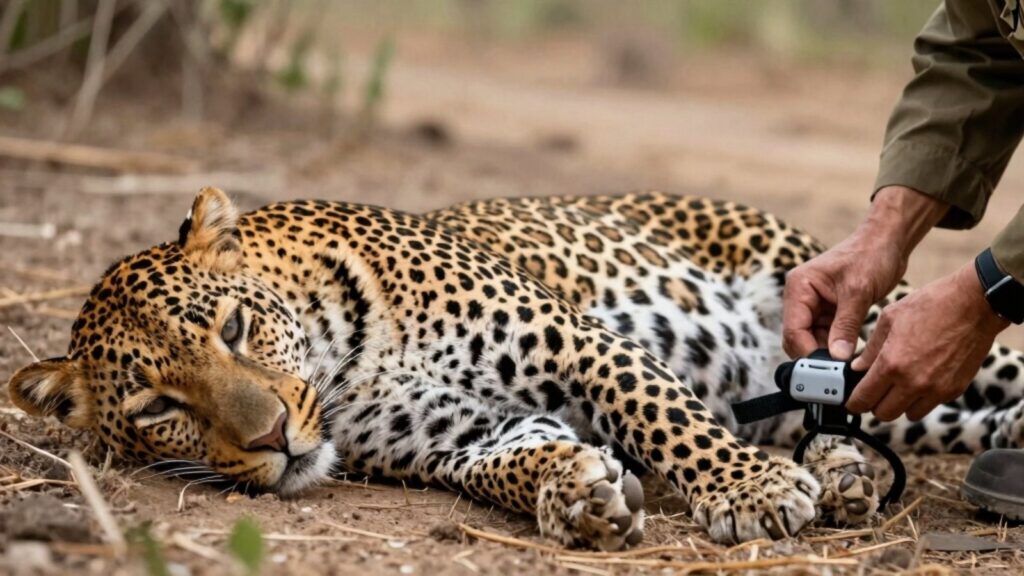
Choosing an ethical wildlife conservation internship starts by confirming that the program prohibits unnecessary contact with animals, since hands-off policies protect wildlife welfare and natural behavior, with rare exceptions only for veterinary care, emergency rescue, short-term rehabilitation, essential scientific research, or regulated conservation management carried out by trained professionals. Ethical programs prioritize peer-reviewed research and measurable conservation outcomes over visitor entertainment, are transparent about permits and ethics approvals, and provide qualified supervision with regular mentorship and check-ins, often holding recognized accreditation. Together, these criteria help ensure the internship benefits wildlife first, while clearly outlining the skills, demands, and responsibilities involved.
Ready to volunteer or intern abroad? Enter code ELI100 at checkout and get $100 OFF any internship or volunteer project worldwide.
Explore ProjectsKey Takeaways
- Verify the program prohibits touching, feeding, or entering enclosures to preserve animal welfare and natural behaviors.
- Confirm hands-on tasks focus on medical necessity like administering medication rather than visitor entertainment or photo opportunities.
- Check for required health screenings including TB testing, vaccination records, and background checks to ensure professional standards.
- Assess physical demands honestly, including lifting requirements and outdoor endurance, to match your capabilities with field realities.
- Research whether the facility follows federal authorization and ethical guidelines that prioritize rehabilitation success over human interaction.
Do I Qualify? Eligibility Requirements by Academic Stage

Where you stand in your educational journey—whether you’re still in high school, enrolled in college, recently graduated, or pursuing an advanced degree—shapes which wildlife conservation internships will accept your application, though the pathways available are more varied than many aspiring conservationists realize.
Most programs establish age limits of 18 years minimum, while youth-focused opportunities accept applicants aged 15-30, with military veterans eligible until 35.
High school students who’ve earned their diploma or GED can access certain positions, particularly those emphasizing education work with children rather than research duties.
Current undergraduates must maintain enrollment throughout their internship duration at accredited institutions, studying fields like biological sciences, conservation, or even communications for specialized roles.
Recent graduates entering graduate programs qualify for U.S. Fish & Wildlife Service positions, and doctoral candidates remain eligible until graduation—meaning your application timeline depends heavily on where you currently sit academically. Some institutions accept candidates with prior college coursework even when they’re not currently enrolled in a degree program, expanding access for individuals who’ve paused their formal education but accumulated relevant academic experience.
Physical Demands: Lifting, Weather, and Terrain Realities
While eligibility screens confirm whether someone can apply to a conservation internship, the physical demands embedded in these positions determine whether someone can realistically sustain the work once accepted—a distinction that deserves careful attention before committing to programs that routinely require lifting fifty-pound backpacks across miles of uneven forest terrain or wading through wetlands in oppressive heat.
Injury prevention becomes essential when positions demand carrying forty pounds over rough ground, stooping repeatedly for stream surveys, or working ten-hour days in biting-insect habitats.
Field hydration—maintaining adequate water intake during extended outdoor work—proves equally critical during humid summers when physical labor combines with uncomfortable conditions.
Prospective interns should honestly assess their stamina for hiking remote distances, their tolerance for inclement weather exposure, and their capacity for daily physical exertion before accepting roles demanding this combination of strength, endurance, and environmental resilience. Organizations like the International Wildlife Rehabilitation Council offer resources that help candidates understand the realistic physical requirements of wildlife conservation work before they commit to specific positions.
Health Requirements: Vaccinations, TB Tests, and COVID Policies
Beyond stamina and physical strength, conservation internships impose specific health requirements—mandatory vaccinations, tuberculosis screenings, and COVID-19 policies—that applicants must fulfill before starting fieldwork.
These create medical prerequisites that can involve advance planning, insurance coordination, and sometimes significant out-of-pocket costs depending on personal coverage.
- COVID-19 vaccination is required at facilities like Think Wild and Saint Louis Zoo’s specific departments, while other programs list it as preferred
- Tetanus vaccination within the last ten years is standard across wildlife rehabilitation centers due to contaminated environments
- Rabies prophylaxis series is mandatory when handling vector species like foxes and raccoons, with some insurance covering costs
- TB testing is required for animal care positions, though recent results within six months remain valid
- Vaccine exemptions rarely exist, and post-exposure care protocols depend entirely on facility resources
Some positions allow flexibility in completing certain vaccinations, with rabies shots being preferable but not strictly required at facilities like Northwoods Wildlife Center where exposure risk can be managed through other protocols.
Time Commitment: Weekly Hours and Program Duration Breakdown
Time commitments for wildlife conservation internships vary dramatically across programs, spanning anywhere from fifteen hours to fifty hours weekly depending on the organization’s mission, the species involved, and whether the position resembles a learning experience or approaches full employment.
Programs like Lindsay Wildlife require a minimum of three 5.5-hour shifts totaling 200 hours over twelve weeks, while Bald Head Island Conservancy averages fifty hours weekly—including nocturnal shifts from 9PM to 6AM for sea turtle monitoring.
Duration ranges from nine-week sessions aligned with academic trimesters to semester-long placements extending four months.
Prospective interns should prioritize time tracking—documenting actual hours against stated expectations—and verify expectation alignment by clarifying whether schedules include weekends, holidays, overnight fieldwork, or weather-dependent variations before committing to any program.
If encountering access issues with organization websites like marinelife.org, be aware that security service protection may temporarily block visits that trigger automated safety measures, requiring email contact with site administrators to resolve the interruption.
Housing, Stipends, and Self-Funded Logistics to Expect
Once prospective interns understand the weekly demands and duration of conservation programs, they’ll need to evaluate the financial reality of participation—a consideration that shapes accessibility more than almost any other factor.
Housing arrangements typically include shared accommodations—dorm-style rooms or bunkhouses—with mandatory on-site residency at most centers.
Weekly living allowances vary dramatically: some programs offer $600-$680, while others provide only $100 food stipends alongside housing.
Meal budgeting becomes essential when stipends barely cover groceries, and emergency funds matter deeply since most positions remain unpaid or minimally compensated.
Transportation adds complexity, as some programs supply work vehicles while others require personal transportation. Programs may provide Center vehicles for official business while still recommending that interns arrange their own transportation for personal needs.
- Co-ed shared housing with roommates is standard
- Food stipends range from $100 to $680 weekly
- AmeriCorps Education awards ($2,817) available after 675 service hours
- Travel allowances sometimes cover initial relocation costs
- Many positions remain unpaid despite housing provisions
Background Checks, Insurance, and Pre-Arrival Paperwork
What catches most applicants off guard isn’t the existence of background checks and pre-arrival paperwork—these administrative requirements feel predictable enough for positions working with animals and vulnerable populations.
What surprises them is the sheer volume of clearances, the timelines involved, and the financial burden these processes can impose before an internship even begins.
Organizations typically require:
- Criminal history verification, social security checks, and driving record assessments
- Child abuse registry clearance for positions involving educational programming
- TB testing, COVID-19 vaccination proof, and tetanus immunization records
- Drug screening for animal care, veterinary, and education roles
- Form I-9 employment authorization documentation
Understanding data privacy protections and records retention policies helps applicants navigate this process with informed confidence rather than anxiety about personal information handling.
Most organizations require all documentation at least 5 days before the position start date, and failure to complete paperwork on time can prevent internship commencement entirely.
How to Research an Organization’s Conservation Track Record

Before committing months of time and energy to an internship, prospective volunteers and early-career professionals need a clear-eyed understanding of whether an organization actually achieves the conservation outcomes it promises—a determination that requires looking beyond mission statements and social media highlights to examine the tracking systems, performance metrics, and transparent reporting practices that separate genuinely effective programs from well-intentioned efforts that struggle to demonstrate measurable impact.
Strong organizations employ standardized Impact Metrics that track species status, habitat conditions, and management effectiveness over time, then share results publicly rather than highlighting only successes.
Governance Transparency—the practice of openly communicating both achievements and challenges through accessible reports—signals institutional maturity, as does evidence of adaptive management where programs adjust strategies based on empirical data rather than assumptions alone. Look for conservation programs that prioritize affordable and replicable monitoring methodologies, ensuring that impact assessment remains sustainable without consuming resources needed for direct conservation action.
Through Global Work & Travel, you can join vetted and ethical wildlife conservation internships, volunteering programs, and field jobs that go beyond tourism. From tracking elephants in Sri Lanka and monitoring lions in South Africa to protecting sea turtles in Costa Rica, these 32 opportunities connect you directly with scientists, rangers, and conservationists on the ground.
Whether you’re a wildlife biology student, a career switcher, or a nature-lover looking for purpose-driven travel, these experiences allow you to gain valuable field skills, make measurable impact, and live immersed in the wild — safely and responsibly.
Many wildlife conservation internships charge a program fee, not as profit, but to cover essential costs such as accommodation, meals, transport, permits, and the salaries of local conservation staff who guide your work. Choosing a reputable organization like Global Work & Travel ensures that your contribution truly supports ethical and sustainable projects.
They provide comprehensive support — including visa assistance, pre-departure guidance, 24/7 in-country and emergency help, and a dedicated trip coordinator. Every project is carefully vetted for animal welfare and conservation integrity, ensuring placements are in sanctuaries, rescue, or rehabilitation centers rather than exploitative settings.
You’ll also receive structured mentorship, feedback, and official certificates and recommendation letters from host organizations — valuable credentials for your career or academic path.
Plus, you’ll get $100 off automatically, and by adding the additional code ELI100 at checkout, you can save an extra $100, for a total of $200 off your Global Work & Travel wildlife internship adventure.
Ready to volunteer or intern abroad? Enter code ELI100 at checkout and get $100 OFF any internship or volunteer project worldwide.
Explore ProjectsAccreditations and Partnerships That Signal Legitimacy
When an organization has earned accreditation from established bodies or maintains active partnerships with government agencies, those credentials serve as external validation that the program meets recognized standards—a particularly valuable signal for applicants who lack insider knowledge of the conservation field.
The Association of Zoos and Aquariums accredits institutions like Indianapolis Zoo, while the Corps Network Accreditation program reviews operations through site visits and expert assessments, valid for five years with annual updates thereafter. These accreditations demonstrate financial transparency and accountability to funders, qualities that protect interns from exploitative arrangements.
Partnership networks also reveal legitimacy:
- Wildlife Conservation Network funds internships with established conservation partners
- American Conservation Experience collaborates with federal agencies for structured placements
- U.S. Fish and Wildlife Service offers government-backed positions
- National Park Service provides accredited educational programs
- International reciprocity agreements indicate global conservation standards
Look for programs that designate participants as research associates rather than generic interns, signaing a commitment to meaningful academic or scientific contribution. Legitimate conservation internships typically require minimum participation thresholds—such as meeting at least five of seven established criteria—and operate with formal contracts outlining goals, weekly hours, and obligations agreed upon by the student, supervising professor, and principal investigator.
Red Flags: Programs Allowing Direct Animal Contact
Programs that encourage or require interns to physically handle wildlife—whether through feeding, grooming, restraining for photographs, or participating in direct medical procedures—often prioritize visitor appeal or volunteer satisfaction over genuine conservation principles, and this emphasis reveals a fundamental misalignment between stated mission and actual practice.
These activities create zoonotic exposure—the transmission of diseases from animals to humans—through bites, scratches, and contact with body fluids, with research showing over 15% of wildlife workers developing new infections within a year.
Beyond individual health risks, direct contact facilitates pathogen spillover, the process by which diseases jump from wildlife to domestic animals or human communities, potentially spreading infections across regions as workers travel between countries or return home carrying novel viruses.
Ready to volunteer or intern abroad? Enter code ELI100 at checkout and get $100 OFF any internship or volunteer project worldwide.
Explore ProjectsWhy No-Contact Policies Mean Better Wildlife Internships
Wildlife internships built around no-contact policies—approaches that prohibit volunteers from touching, feeding, or entering enclosures with animals—represent a fundamental shift in how conservation programs operate, moving away from visitor satisfaction toward practices that genuinely serve the animals’ needs.
These policies preserve behavioral integrity, meaning animals maintain natural instincts essential for survival.
While establishing community trust through demonstrable ethical standards:
- Observation of species-specific behaviors without human interference supports accurate research data
- Camera trap monitoring and habitat surveys develop practical conservation skills
- Disease transmission risks decrease when physical barriers remain between participants and wildlife
- Enclosure maintenance and environmental enrichment provide meaningful hands-on experience
- Educational outreach roles connect interns with communities valuing animal welfare
Programs following these standards align with professional conservation organizations prioritizing rehabilitation success over interactive experiences. Ethical internships facilitate networking with professionals who share evidence-based approaches to wildlife protection and can provide mentorship throughout your conservation career.
What “Hands-On Experience” Actually Means in Rehabilitation
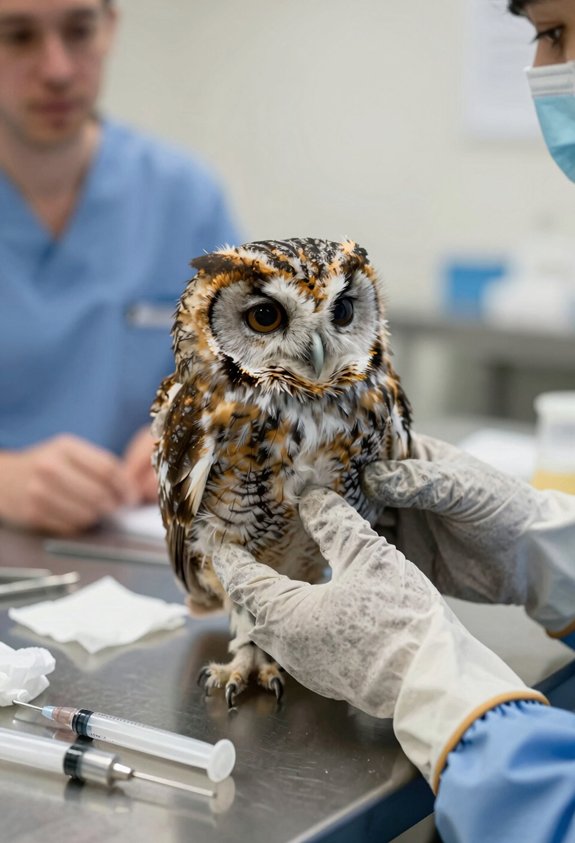
The term “hands-on experience” carries different weight in legitimate wildlife rehabilitation than it does in volunteer tourism programs, where the phrase often serves as marketing language designed to attract participants seeking memorable animal encounters.
In ethical settings, hands-on work means executing essential care tasks—administering medications, conducting dehydration assessments through skin tent tests, and preparing specialized diets—while maintaining strict protocols that minimize human contact.
Rehabilitators employ puppet feeding techniques with baby raptors, using bird-shaped tools to prevent imprinting on humans, and they design release simulations that allow animals to practice natural behaviors with their own species.
These practices prioritize the animal’s successful return to the wild over any romantic notion of bonding, ensuring that direct contact serves medical necessity rather than human satisfaction.
Legitimate programs operate under federal stranding agreements or equivalent governmental authorization, which legally defines the scope and accountability of all rehabilitation activities.
Daily Tasks: Enclosure Cleaning, Food Prep, and Monitoring
Understanding the unglamorous reality of daily rehabilitation work requires confronting a simple truth: most hours at a legitimate wildlife center involve tasks that bear little resemblance to the intimate animal encounters advertised by tourism operations.
Interns spend considerable time scooping waste, hosing enclosures, processing whole animal diets, and preparing orphan formula for dependent infants according to strict feeding schedules.
These foundational responsibilities directly support animal welfare while teaching observers patience and attention to detail.
Daily responsibilities typically include:
- Scrubbing and disinfecting indoor and outdoor enclosures to prevent disease transmission
- Preparing species-appropriate meals, sometimes involving road-kill processing
- Recording behavioral observations and appetite changes for medical staff
- Implementing enrichment strategies that encourage natural behaviors
- Maintaining laundry, dishes, and general facility cleanliness
Beyond direct animal contact, interns contribute to horticulture and grounds maintenance through activities like pollinator garden upkeep, brush clearing, and collecting greenery for enrichment purposes.
Look for Programs Contributing to Published Research
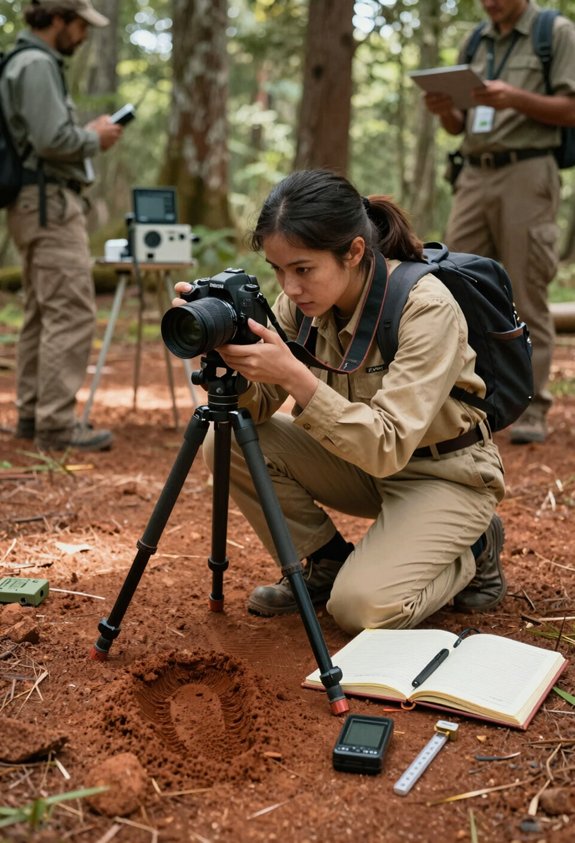
Beyond the daily rhythm of cleaning schedules and feeding protocols, prospective interns should examine whether a program actively contributes to the scientific body of knowledge that informs conservation decisions.
Programs like the UC Reserves NRS Experiential Internship and San Diego Zoo Wildlife Alliance Conservation Science Summer Fellowship generate data that undergoes peer review—the process where independent experts evaluate research quality before publication. This scrutiny guarantees that conservation strategies rest on verified evidence rather than assumptions.
Similarly, USGS Ecology internships offer access to long-term datasets spanning decades, the kind of information that builds citation impact, meaning other scientists reference this work when developing their own studies.
Research-focused programs transform intern contributions into tangible knowledge that shapes how biologists approach species recovery across entire regions. The UC Riverside NRS program emphasizes experiential field research through partnerships with faculty and graduate students at Natural Reserves, providing mentorship networks that expose undergraduates to career paths in natural areas.
Educational Focus: Natural Behavior vs. Entertainment Models
When evaluating internship descriptions, aspiring conservationists should notice whether programs frame animals as research subjects contributing to species survival or as performers meeting human expectations for interaction.
Organizations prioritizing behavioral ethology—the scientific study of animal behavior in natural contexts—typically emphasize monitoring techniques like camera trap placement and GPS tracking rather than handling sessions for visitors.
Interpretive strategies, or the methods used to explain animal behavior to others, reveal whether education serves conservation science or entertainment purposes.
Programs centered on natural behavior focus on these elements:
- Camera trap deployment and GPS tracking that generate data for peer-reviewed publications
- Behavioral observation techniques documenting species-specific needs and habitat preferences
- Enrichment activities designed around natural behaviors rather than visitor interaction schedules
- Training in wildlife monitoring methodologies and standardized data collection protocols
- Research contributions to endangered species protection and ecosystem conservation outcomes
Some programs instead utilize non-releaseable animal ambassadors to teach visitors about wildlife through direct observation of individuals that cannot return to their natural habitats.
Ask About Supervision Ratios and Mentor Availability
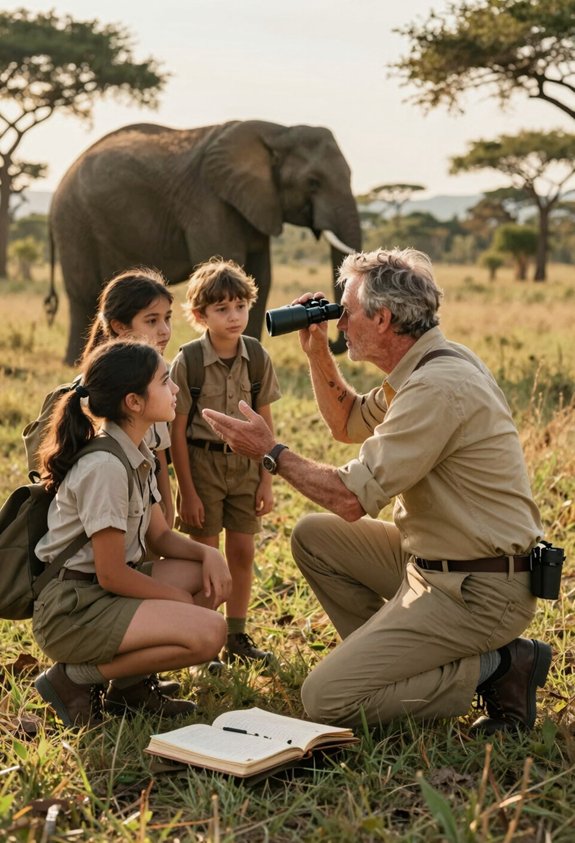
Quality supervision transforms an internship from a credentials-building exercise into genuine professional preparation, which means prospective interns should ask direct questions about who’ll guide their daily work and how often that guidance occurs.
Ratio Transparency—openly sharing how many interns work under each supervisor—reveals whether meaningful mentorship is possible or if an intern will compete for attention.
Programs that assign dedicated mentors and schedule weekly check-ins demonstrate commitment to individual development, while vague promises about “available staff” often signal overburdened supervisors.
Mentor Continuity matters equally: consistent guidance from the same experienced professional builds trust and allows for cumulative learning, whereas frequent staff turnover disrupts training and leaves interns managing complex situations without adequate support or accountability.
Reputable programs ensure that research methods and community engagement form the core components of their internship structure, providing interns with both scientific rigor and practical field skills under proper supervision.
Are You Funding Operations or Receiving Real Training?
How does an organization manage to host dozens of interns without charging fees, while another insists volunteers must cover their own housing and meals?
The funding model reveals whether you’re receiving structured training or subsidizing day-to-day operations through unpaid labor—what researchers call operational dependency, when organizations rely on free work to function.
Programs with genuine training metrics, measurable learning outcomes that demonstrate skill development, typically secure grants, AmeriCorps funding, or federal partnerships that cover stipends and housing.
Warning signs include:
- Unpaid positions requiring you to fundraise for basic expenses like travel and meals
- Organizations offering only college credit without compensation despite financial capacity
- Missing information about funding sources, suggesting transparency gaps
- Large intern cohorts with limited supervision ratios, indicating workforce needs
- Paid staff performing identical tasks while interns work without stipends
Real training investments show through structured compensation and individualized mentorship. Reputable programs limit awards per organization to prevent over-reliance on student labor, with some university-vetted opportunities capping support at five awards annually to any single host
Academic Credit Options and Post-Internship Outcomes
Before committing to an internship, students should understand how academic credit works and what happens after the experience ends, since these practical considerations affect both the immediate value of participation and long-term career benefits.
Most programs require college enrollment and minimum time commitments—typically 80 to 135 hours per credit—with pass/fail grading based on deliverables like field journals, presentations, or written reports.
Students must coordinate with advisors and internship coordinators one semester ahead to guarantee credit transferability between their home institution and the sponsoring organization.
Beyond immediate coursework, these experiences establish career pipelines by building professional networks, clarifying career goals, and providing employment references.
Some opportunities accept participants without college degrees, focusing instead on self-motivation and attention to detail as primary qualifications. Participants develop specialized skills in research, management, and communication that distinguish them from peers with only classroom training.
Former interns consistently describe their wildlife conservation experiences as transformative periods that clarified career direction.
Alumni Experiences: What Former Interns Say About Programs
They also built technical competencies and established lasting professional relationships—outcomes that extend far beyond the weeks or months spent in the field.
Alumni memory highlights frequently include conquering fears through public speaking opportunities and discovering specialized interests like seabird conservation.
They also describe mastering practical skills from bird banding to raptor husbandry.
These programs deliver life lessons about persistence, interdisciplinary thinking, and professional networking that shape careers for years afterward.
Common themes from former intern testimonials include:
- Professional mentors who provided encouragement during challenges and remained career contacts long after programs ended
- Technical certifications like Wilderness First Aid that opened new employment pathways
- Overcoming self-doubt by accomplishing previously impossible-seeming tasks through supportive crew leadership
- Exposure to diverse conservation disciplines that refined career focus toward specific taxa or methods
- Cross-cultural perspectives developed through combined fieldwork and philosophical coursework
- Hands-on experiences like banding Cedar Waxwings that create memorable connections with wildlife and strengthen field identification abilities
Does This Wildlife Internship Match Your Career Path?
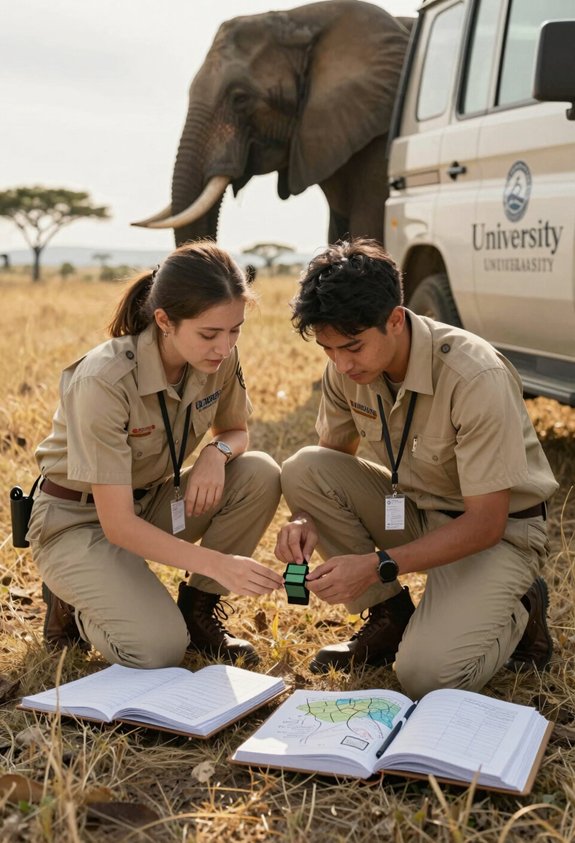
Where exactly does an internship position fit within one’s conservation aspirations—as a stepping stone toward research leadership, a proving ground for hands-on field skills, or perhaps a chance to test whether wildlife work truly aligns with personal strengths?
Career mapping, the deliberate alignment of experiences with long-term professional goals, requires examining how specific roles connect to desired endpoints: entry-level field technician positions build foundational skills, while specialized marine conservation or rehabilitation placements prepare candidates for veterinary or research-intensive careers.
Networking opportunities embedded within programs—mentorship from experienced biologists, connections with research teams, access to professional communities—often prove as valuable as technical training itself. Programs offering direct hire pathways or permanent conversion after 640 qualifying hours provide concrete advancement trajectories, transforming temporary experiences into sustainable career momentum within federal conservation agencies. Beyond traditional field positions, volunteer management roles organize participant experiences and coordinate conservation travel logistics, developing transferable skills in program administration and international operations.
Tourist Volunteer Programs vs. Professional Internships
Wildlife conservation opportunities split into two distinct categories that differ fundamentally in their purpose, structure, and outcomes.
These are tourist volunteer programs, which prioritize participant experience while contributing to conservation goals, and professional internships, which focus primarily on skill development and career advancement within the field.
Key distinctions between these pathways include:
- Tourist programs charge fees covering logistics, while professional roles typically provide stipends or salaries
- Participant motivation shifts from personal enrichment and exploration to building technical expertise for conservation careers
- Duration ranges from 2-24 weeks for volunteer experiences to 6-48 months for professional positions
- Skill development emphasizes basic exposure in tourist programs versus advanced techniques like radio telemetry in professional roles
- Program scalability allows tourist programs to accommodate many participants simultaneously, while professional internships maintain selective, limited cohorts focused on intensive training
Professional internships often provide comprehensive mentorship from experienced conservationists and access to industry networks that enhance long-term career prospects.
When Strict Rules Protect Animals Instead of Limiting You
Regulations in wildlife conservation programs often appear restrictive at first glance, yet they serve as the foundation for protecting both animals and the ecosystems they inhabit, transforming what might seem like limitations into opportunities for meaningful, ethical engagement.
Protocols that prohibit direct contact prevent disease transmission, while supervised feeding using natural diets avoids creating dependency—both examples of Ethical Practice that safeguards animal welfare.
Handling restrictions require only trained personnel perform medical interventions, and habitat access rules preserve natural behaviors in breeding zones.
These guidelines don’t constrain volunteers; they create frameworks for Volunteer Empowerment through structured skill-building in data collection and non-invasive monitoring techniques.
Minimum commitment periods allow sustained contributions, while mentorship structures promote safety through supervision, ultimately preparing interns for careers grounded in conservation science rather than harmful tourist-driven interactions. Connecting with conservation organizations during your search helps identify programs that prioritize animal welfare over profit, ensuring your time contributes to legitimate conservation efforts rather than exploitative wildlife tourism.
Evaluating Programs: A Checklist for Ethical Wildlife Internships
How does one distinguish genuine conservation work from programs that merely position volunteers alongside wildlife for revenue?
Several indicators reveal whether an organization prioritizes animals or income.
Ethical programs demonstrate Community Engagement by partnering with local NGOs and sharing research findings, ensuring that Data Sovereignty—the right of communities to control information about their natural resources—remains protected.
Prospective interns should evaluate:
- Research contributions: Data feeds into protected area management decisions and peer-reviewed publications
- Expert supervision: Staff hold certifications in Wilderness First Aid, Emergency First Response, and species-specific protocols
- Transparent operations: Detailed position descriptions include hazard assessments, required skills, and conservation outcomes
- Ethical frameworks: Organizations follow established principles like British Standards 8848 and maintain published safety policies
- Long-term impact: Work focuses on habitat improvement and scientific monitoring rather than tourism experiences
Programs should clearly articulate their ongoing research projects and conservation goals, allowing applicants to assess whether opportunities align with legitimate scientific objectives or simply offer wildlife encounters.
Ready to volunteer or intern abroad? Enter code ELI100 at checkout and get $100 OFF any internship or volunteer project worldwide.
Explore ProjectsIf you’re exploring hands-on experience in ecology or wildlife biology, don’t miss my complete guide to wildlife conservation internships with global work and travel, where I break down what’s worth your time, money, and long-term career goals.
References
- https://www.littlerockzoo.com/learn/internship-program/
- https://carolinawildlife.org/about/internships/
- https://www.usaconservation.org/epic/
- https://thesca.org/serve/opportunities
- https://www.worldwildlife.org/about/careers/people-and-culture/bridge-internships/
- https://www.projects-abroad.org/blog/wildlife-conservation-internships-abroad-guide/
- https://stlzoo.org/employment/internships

Erzsebet Frey (Eli Frey) is an ecologist and online entrepreneur with a Master of Science in Ecology from the University of Belgrade. Originally from Serbia, she has lived in Sri Lanka since 2017. Eli has worked internationally in countries like Oman, Brazil, Germany, and Sri Lanka. In 2018, she expanded into SEO and blogging, completing courses from UC Davis and Edinburgh. Eli has founded multiple websites focused on biology, ecology, environmental science, sustainable and simple living, and outdoor activities. She enjoys creating nature and simple living videos on YouTube and participates in speleology, diving, and hiking.
For your next application
Keep applying and hearing nothing back?
The Biology Job Application Kit shows you which stage of your applications is failing and how to fix it. 46 guides, 22 editable templates, an application tracker and an ATS CV Creator licence.
See the Job Application Kit