
This post contains affiliate links from Amazon and other affiliate networks. As an Amazon Associate I earn from qualifying purchases, at no extra cost to you. I only recommend products I have used or researched.
I’ve discovered that the best marine biology books balance stunning visuals with scientific accuracy to engage readers at every level. For career guidance, “Becoming a Marine Biologist” offers honest insights into modern research paths. Visual learners will love “Oceanology: The Secrets of the Sea Revealed” and “Ocean Anatomy” for their gorgeous illustrations. “The Soul of an Octopus” captivates with consciousness exploration, while field guides like “National Audubon Society Guide to Marine Mammals” provide practical identification tools.
Continue below to explore my complete recommendations.
Becoming a Marine Biologist (Masters at Work)

If you’re drawn to the unconventional paths that lead to marine biology careers, Robin Baird’s “Becoming a Marine Biologist” offers an honest glimpse into the field’s evolving demands. Baird, renowned for his Ziphiid research through Cascadia Research Collective, emphasizes how statistics and mathematical modeling now dominate modern marine biology. He acknowledges the challenges naturalists face without strong statistical skills. His groundbreaking work spans NE Pacific transient killer whale social behavior, Naval sonar impacts on cetaceans, and Hawaiian false killer whale populations. You’ll appreciate his insights into solving mysteries like Cross Seamount Mesoplodon species using acoustic clues. It’s an engaging, affordable read for aspiring marine biologists.
Best For: Aspiring marine biologists seeking an honest perspective on modern career paths and the statistical demands of contemporary research.
Pros:
- Provides realistic insights into the evolving skill requirements in marine biology, particularly the importance of statistics and mathematical modeling
- Written by a respected researcher with extensive hands-on experience studying cetaceans and solving real-world conservation challenges
- Offers valuable guidance on non-traditional pathways into marine biology careers
Cons:
- May discourage naturalists who lack strong mathematical and statistical backgrounds
- Focuses heavily on cetacean research, which may not appeal to those interested in other marine biology specializations
- Emphasizes the technical aspects of modern marine biology over fieldwork and natural history components
Introduction to the Biology of Marine Life: .
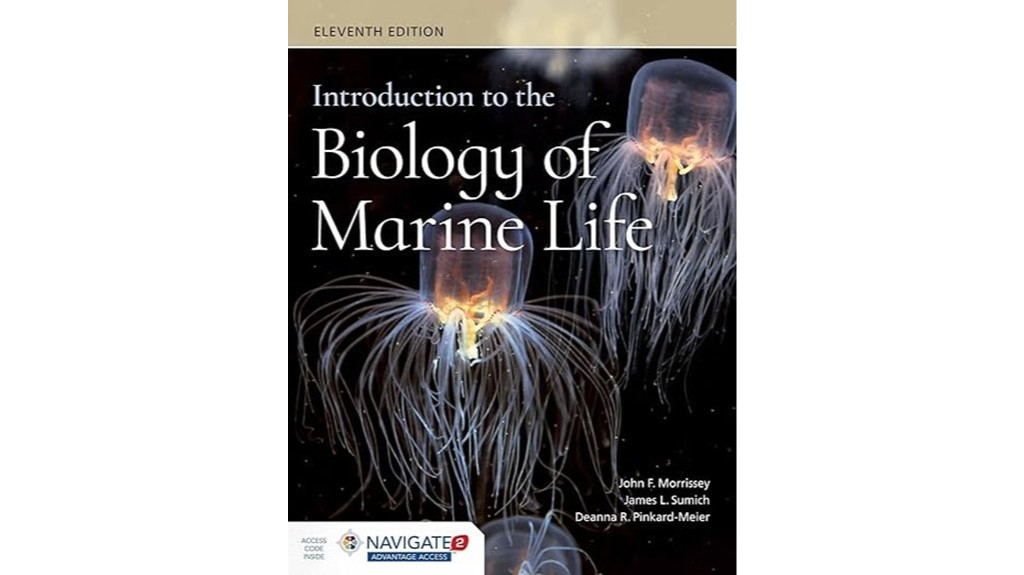
“Introduction to the Biology of Marine Life” stands out as an excellent choice for second or third-year biology majors who need an accessible textbook for undergraduate Marine Biology courses. You’ll find it more affordable on Amazon than college bookstores, with convenient Prime delivery. However, you should be aware of significant drawbacks that affect its educational value.
The book contains numerous errors, inaccuracies, and contradictory information that’ll confuse you during studies. The figures don’t effectively illustrate concepts, and instructor resources are inadequate. If you’re teaching this course, you might want to search for alternatives due to these quality issues affecting student comprehension.
Best For: Second or third-year biology majors taking undergraduate Marine Biology courses who need an accessible textbook and want to save money compared to college bookstore prices.
Pros:
- More affordable on Amazon than college bookstores with convenient Prime delivery
- Written at an accessible level appropriate for undergraduate biology majors
- Widely used textbook that peers are likely familiar with
Cons:
- Contains numerous errors, inaccuracies, and contradictory information that confuses students
- Figures don’t effectively illustrate concepts and instructor resources are inadequate
- Paperback format in used copies may have compromised condition and quality issues
Ocean Anatomy: The Curious Parts & Pieces of the World under the Sea
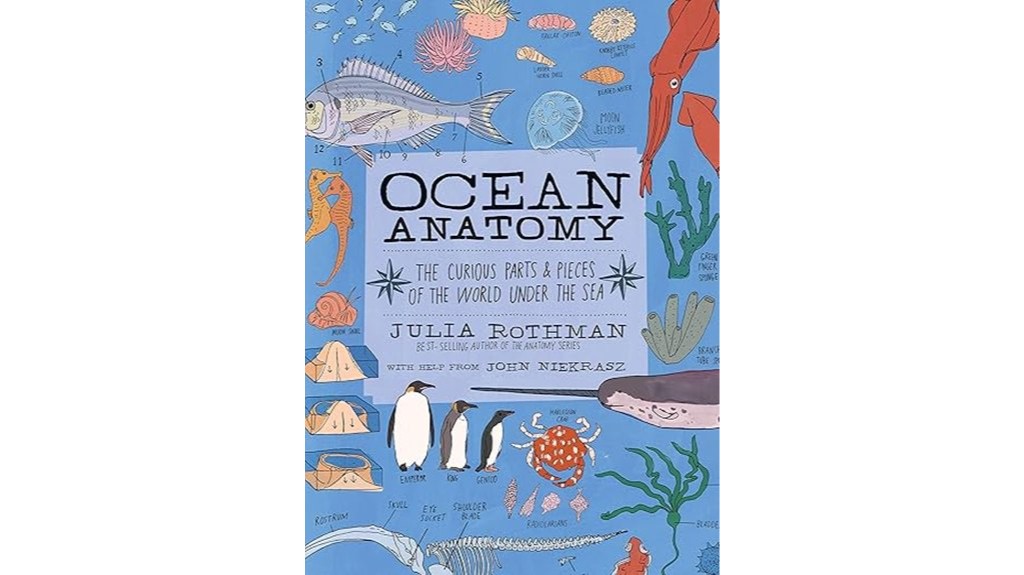
“Ocean Anatomy: The Curious Parts & Pieces of the World under the Sea” stands out as an exceptional choice for families seeking a marine biology resource that bridges multiple age groups, from preschoolers discovering their first sea creatures to middle schoolers diving deeper into ocean science. You’ll appreciate the gorgeous, detailed illustrations that make complex marine concepts accessible and engaging. The book’s sturdy cardstock construction withstands frequent handling by curious young readers. While it doesn’t claim to be an exhaustive textbook, it effectively sparks children’s interest in marine biology through fascinating facts and unique artwork that encourages repeated exploration and discussion.
Best For: Families homeschooling children from preschool through middle school who want an engaging, durable marine biology resource with beautiful illustrations to spark interest in ocean science.
Pros:
- Gorgeous, detailed illustrations make complex marine concepts accessible and visually appealing for repeated engagement
- Sturdy cardstock construction withstands frequent handling by children while maintaining quality
- Effectively bridges multiple age groups from preschoolers to middle schoolers with fascinating facts that encourage discussion
Cons:
- Not an exhaustive textbook, so may lack comprehensive coverage for advanced study
- Simplified information may not satisfy readers seeking in-depth scientific detail
- Limited scope as it serves as an educational supplement rather than a complete curriculum resource
Oceanology: The Secrets of the Sea Revealed (DK Secret World Encyclopedias)
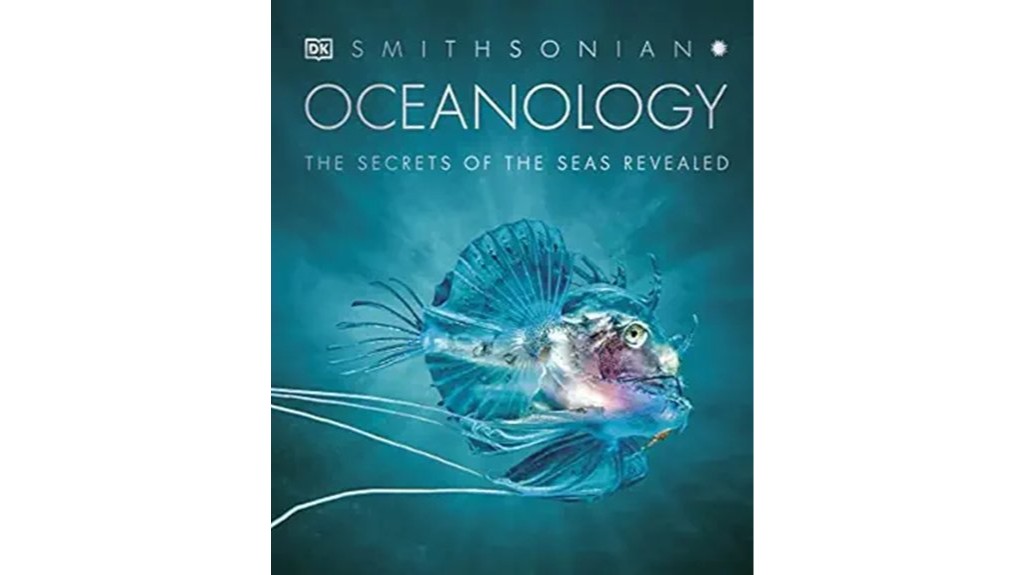
DK’s “Oceanology: The Secrets of the Sea Revealed” stands out as the perfect marine biology book for visual learners who crave stunning photography paired with accessible scientific content. You’ll appreciate the meticulous research and high-quality printing that makes this encyclopedia both educational and decorative. Whether you’re three or thirty, you’ll find the classification section particularly engaging as it showcases ocean life’s incredible diversity. While some readers feel the content’s superficial, focusing more on images than in-depth text, you’ll discover valuable information nuggets throughout. This versatile reference serves aspiring marine biologists excellently while doubling as an inspiring coffee table book for any ocean enthusiast’s collection.
Best For: Visual learners of all ages who want an accessible introduction to marine biology with stunning photography, whether as an educational resource or decorative coffee table book.
Pros:
- Excellent photography and high-quality printing on thick paper with meticulous research
- Appeals to a wide audience from young children to adults and aspiring marine biologists
- Serves dual purpose as both educational reference and inspiring decorative book
Cons:
- Content can be superficial with more emphasis on images than in-depth text
- Price may be high relative to the amount of detailed information provided
- Technical issues reported with digital Kindle version affecting reading experience
An Anthology of Aquatic Life (DK Childrens Anthologies)
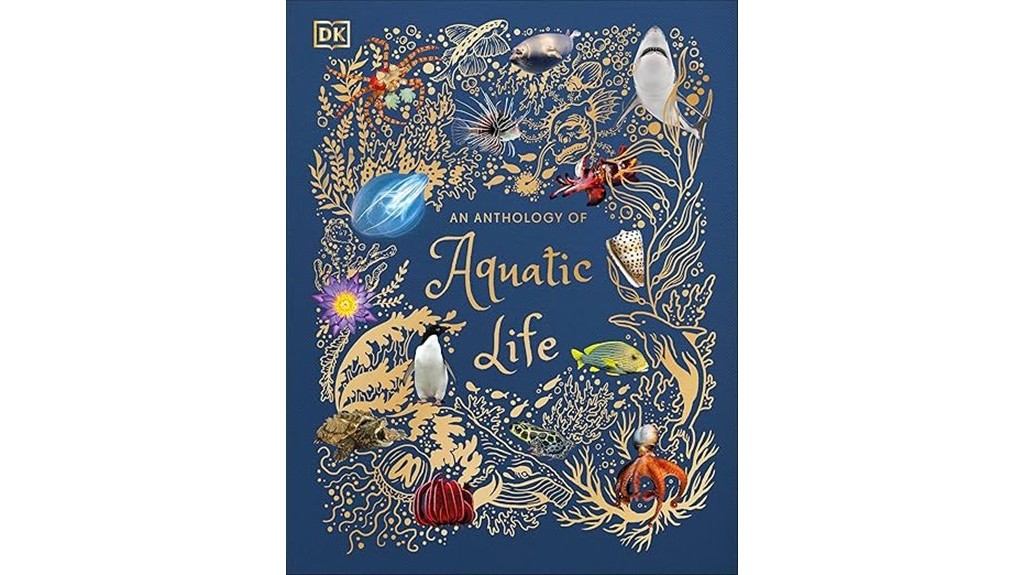
Capturing young readers’ attention while delivering substantive educational content, An Anthology of Aquatic Life from DK Children’s Anthologies excels as the ideal choice for families seeking to spark children’s interest in marine biology. You’ll find stunning illustrations paired with educational descriptions that engage both younger and older children without oversimplifying complex concepts. The book’s high-quality production features coated pages that withstand countless readings, making it a durable addition to your family library. Parents consistently report enjoying shared reading experiences, often covering 2-3 animals nightly while discussing vibrant artwork. This visually engaging resource successfully transforms learning about aquatic creatures into an engaging family activity.
Best For: Families with children of various ages who want to foster an interest in marine biology through high-quality, visually engaging educational content that can be enjoyed together during reading time.
Pros:
- Features stunning illustrations and educational descriptions that engage both younger and older children without oversimplifying complex concepts
- High-quality production with coated pages that withstand multiple readings, ensuring durability as a long-term family library addition
- Facilitates meaningful family bonding experiences through shared reading sessions and discussions about aquatic life
Cons:
- Some customers have reported receiving damaged copies with bent corners, particularly problematic when purchasing as gifts
- Limited information available about the total number of creatures covered or the depth of content for each species
- May require parental guidance for younger children to fully understand and engage with the educational content
Creatures of the Deep: In Search of the Sea’s Monsters and the World They Live In
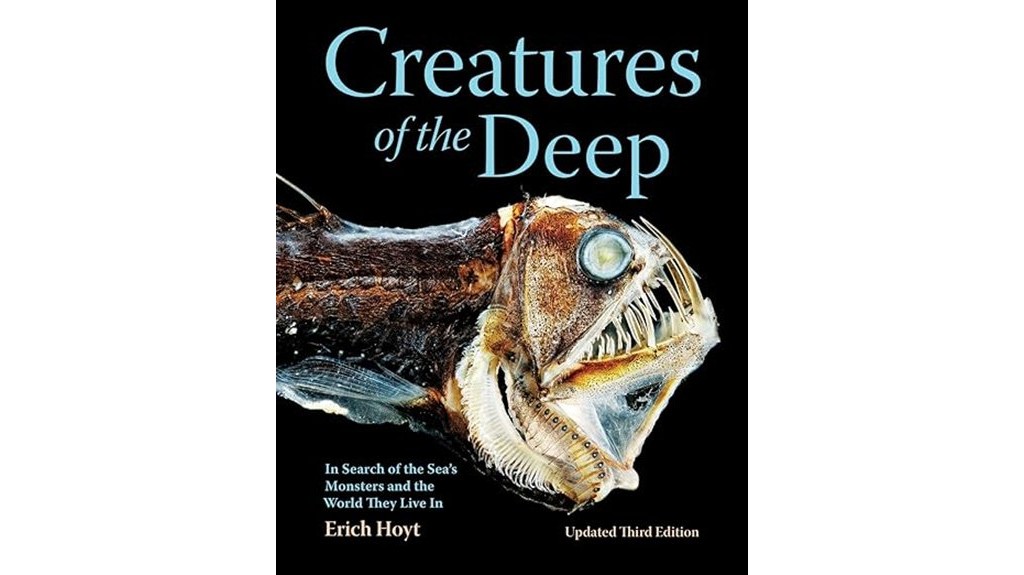
Beautifully illustrated pages reveal the mysteries lurking in Earth’s deepest waters, making “Creatures of the Deep” an exceptional choice for aspiring marine biologists and anyone fascinated by the ocean’s most extraordinary inhabitants. You’ll explore creatures that produce their own light in total darkness while surviving incredible pressure at ocean depths. The book delivers up-to-date scientific information through startling images and descriptive content that bring the mysterious deep sea to life. While some readers desire more detailed information, you’ll find this visually appealing book provides your closest encounter with creepy deep-sea creatures without getting wet, making it highly recommended for ocean enthusiasts.
Best For: Aspiring marine biologists, ocean enthusiasts, and anyone fascinated by deep-sea creatures who wants to explore the mysteries of Earth’s deepest waters through stunning visuals and scientific information.
Pros:
- Beautifully illustrated with startling images and up-to-date scientific information that brings deep-sea creatures to life
- Educational and engaging content perfect for learning about creatures that produce their own light and survive incredible ocean pressure
- Excellent book quality with prompt delivery and protective packaging ensuring the product arrives in perfect condition
Cons:
- Content may be too advanced for younger readers, though still suitable for reading aloud
- Some readers found the information too general and desired more detailed scientific content
- Limited illustrations and depth of information about specific creatures and their living conditions according to some reviews
The Ultimate Shark Field Guide: The Ocean Explorers Handbook
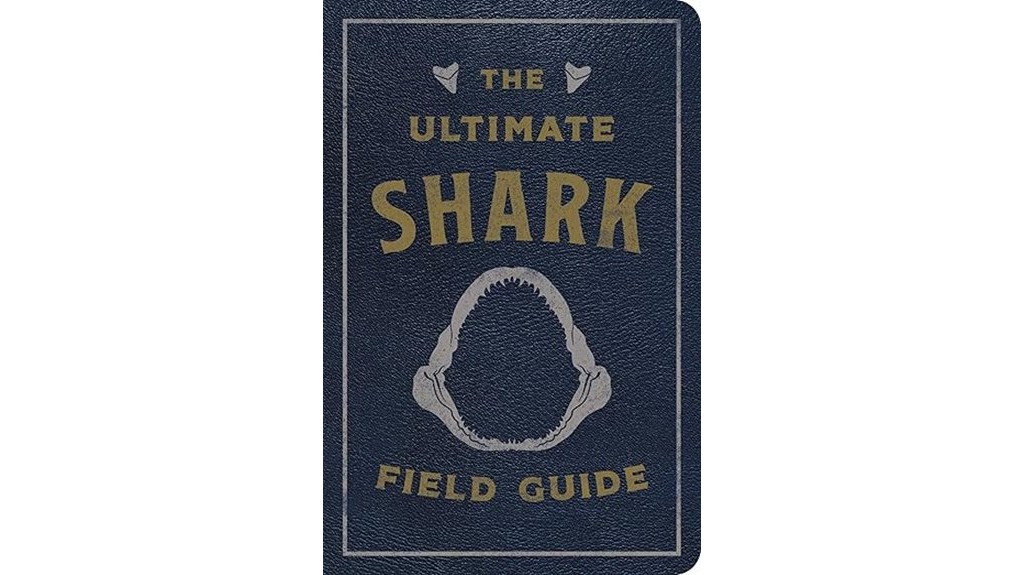
Shark enthusiasts seeking an engaging field guide that prioritizes visual appeal over rigid scientific formatting will find “The Ultimate Shark Field Guide: The Ocean Explorers Handbook” perfectly suited to their interests. You’ll appreciate its leather cover featuring actual drawings and muted illustrations that create an authentic underwater experience. The intentional “water droplet” markings aren’t damage—they’re clever design choices that enhance the oceanic atmosphere.
This field guide works for all ages, making it an excellent gift for anyone fascinated by sharks. While it’s more entertainment than hardcore science, you’ll discover obscure species alongside beautiful artwork. Children particularly love the illustrations, and the book consistently receives positive feedback from recipients, though you might notice some spine creasing initially.
Best For: Shark enthusiasts of all ages who prefer visually appealing field guides with artistic illustrations over strict scientific reference materials, and those seeking an engaging gift for shark lovers.
Pros:
- Features beautiful muted illustrations with authentic leather cover and creative water droplet design elements that enhance the oceanic atmosphere
- Appeals to all age groups from children to adults, making it versatile for families and an excellent gift option
- Includes obscure shark species alongside popular ones, offering discovery of lesser-known varieties
Cons:
- Prioritizes entertainment value over rigorous scientific content, limiting its use as a serious reference tool
- May have initial spine creasing and picture quality issues that require breaking in
- Missing some popular shark species like the sucker shark that readers expect to find
National Geographic Ocean: A Global Odyssey
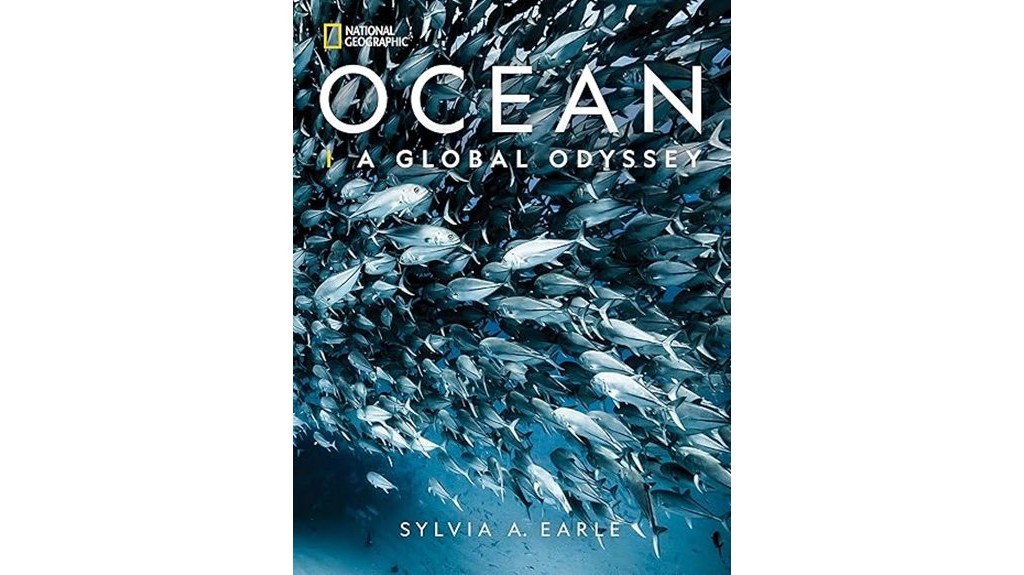
National Geographic Ocean: A Global Odyssey stands out as the perfect choice for visual learners who crave stunning imagery alongside extensive ocean science education. You’ll discover amazing photography paired with quality printing that makes this heavy tome worth every ounce. The book’s topics are organized effectively, making ocean science accessible for all ages while introducing significant scientists and their groundbreaking research.
You can engage with one chapter or multiple based on your available time. The content covers various ocean science subjects and ongoing marine crises, featuring impressive maps and beautifully captured photos. Whether you’re gifting it or adding to your personal collection, this inspiring exploration of marine life comes highly recommended for ocean enthusiasts.
Best For: Visual learners and ocean enthusiasts of all ages who want stunning photography combined with comprehensive ocean science education and research insights.
Pros:
- Amazing photography with quality printing and impressive maps that make complex ocean science accessible
- Well-organized content that allows flexible reading – engage with one chapter or multiple based on available time
- Covers diverse ocean science subjects and introduces significant scientists and their groundbreaking research
Cons:
- Heavy weight may make it less portable for casual reading
- Paper sleeve and packaging quality issues can result in damage during shipping
- High-quality printing and materials likely come at a premium price point
Marine Life of the Pacific Northwest: A Photographic Encyclopedia
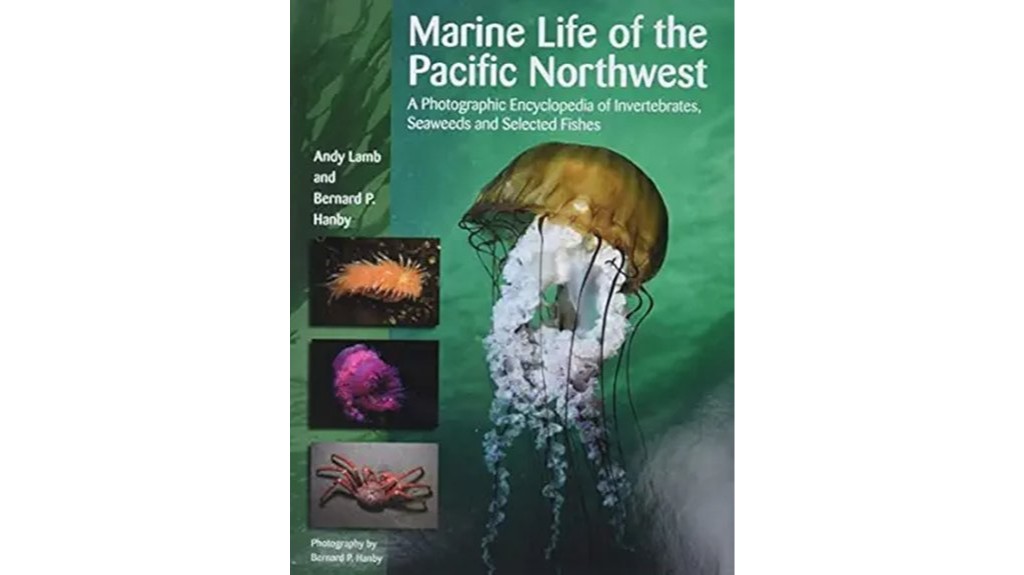
When you’re exploring tide pools or returning from a dive along the Pacific Northwest coast, “Marine Life of the Pacific Northwest: A Photographic Encyclopedia” serves as your definitive identification guide. This extensive resource features excellent photographs covering invertebrates, seaweeds, and selected fishes—more organisms than any competing book. You’ll appreciate its color-coded pages and logical organization for quick species identification. The stunning, professional images make identifying everything from worms to octopuses straightforward without overwhelming detail. While it’s ideal for home use rather than fieldwork due to its hardcover format, marine biology instructors consistently recommend it for both casual beachgoers and serious enthusiasts seeking accurate identification.
Best For: Marine biology enthusiasts, educators, and beachgoers who want a comprehensive identification guide for Pacific Northwest invertebrates, seaweeds, and selected fishes for home reference after tide pooling or diving expeditions.
Pros:
- Contains more marine organisms than any other available book with excellent professional photographs for easy species identification
- Features color-coded pages and logical organization with an index for quick navigation and identification
- Highly recommended by marine biology instructors and provides succinct information without overwhelming detail
Cons:
- Hardcover format makes it unsuitable for portable field use during actual tide pooling or diving trips
- Does not include marine mammals and only covers a limited selection of fish species
- Some users have reported binding issues and damage upon arrival
Marine Biology
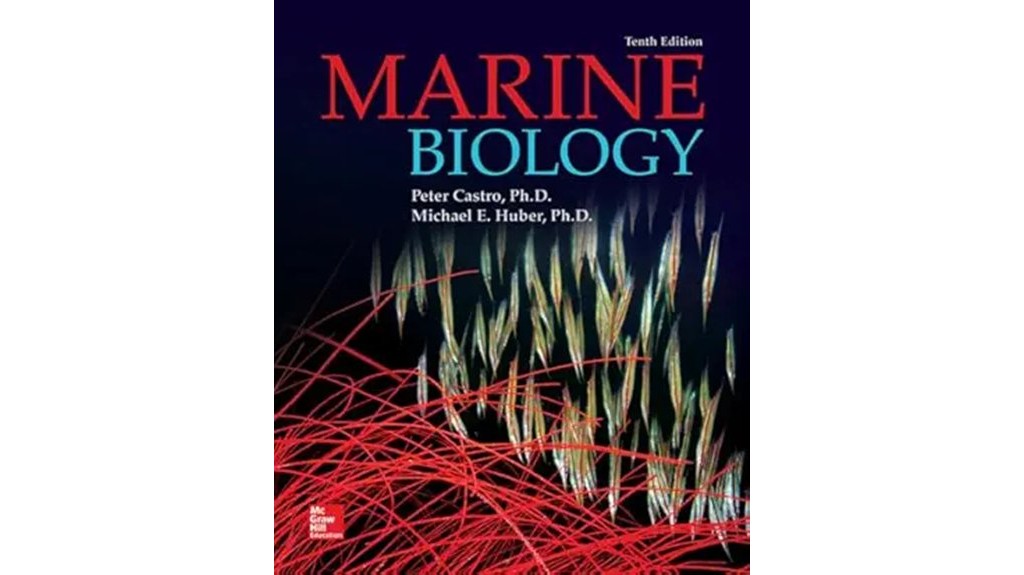
Marine biology books offer exceptional value if you’re seeking cost-effective educational resources that won’t compromise on quality. You’ll find significant savings compared to local bookstore prices, making these an economical choice for college rentals. The high-quality knowledge and sturdy materials mean pages won’t tear unless intentionally damaged. You’ll receive books quickly before classes start, arriving in great condition with intact pages and beautiful covers. However, you should exercise caution regarding potential cover cleanliness issues and loose pages. Despite these concerns, marine biology majors consistently express love for these resources, often regretting not purchasing earlier due to their exceptional content and usability.
Best For: Marine biology students and majors looking for cost-effective, high-quality educational resources with fast delivery and durable construction.
Pros:
- Significant cost savings compared to local bookstore prices, making it an economical choice for college rentals
- High-quality construction with sturdy materials and pages that won’t tear under normal use
- Fast delivery ensures books arrive before classes start, with intact pages and beautiful covers
Cons:
- Some books may arrive with cleanliness issues including used stickers and dirt on covers
- Quality concerns reported with pages appearing loose in some copies
- Mixed feedback on overall condition consistency between different orders
Introduction to Marine Biology
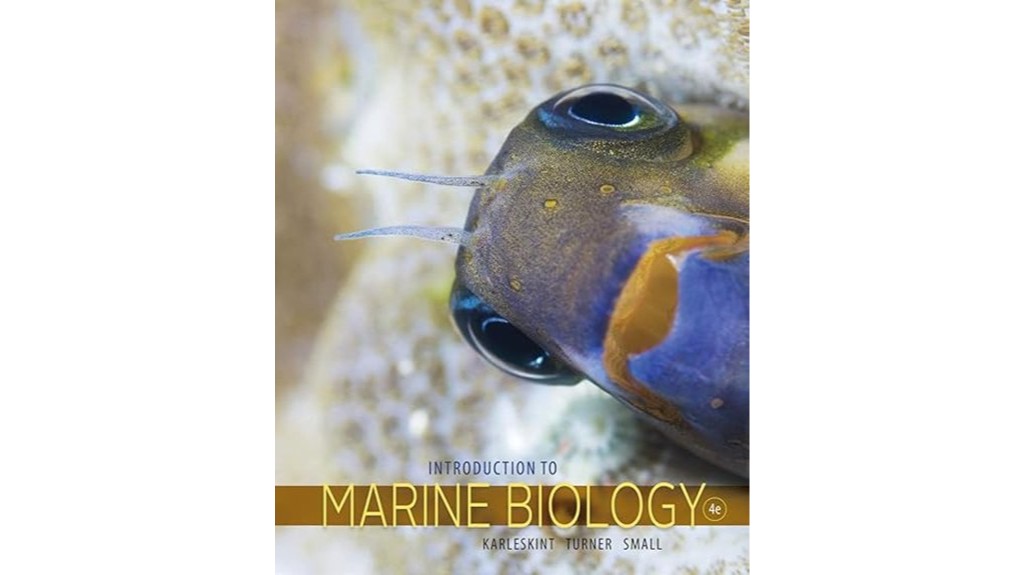
Books covering introduction to marine biology excel as educational resources if you’re seeking extensive yet accessible content for independent study or homeschooling programs. You’ll find thorough coverage with easy-to-understand explanations that make complex marine biology systems digestible. These texts work perfectly for earning science credit while supplementing hands-on learning experiences like field research at marine centers or data collection during snorkeling expeditions. However, you might encounter usability challenges when reading digital versions on mobile devices, as textbook formatting doesn’t always translate well to smaller screens. Consider purchasing used copies since you’ll likely sell them after completing your coursework.
Best For: Students pursuing homeschooling science credit or independent study who want comprehensive marine biology coverage with opportunities for hands-on field research and data collection.
Pros:
- Comprehensive coverage with easy-to-understand explanations that make complex marine biology systems accessible
- Excellent for earning science credit while supporting practical lab work and field research experiences
- High-quality educational content that provides thorough foundation in marine biology concepts
Cons:
- Poor usability when reading digital versions on mobile devices like iPhone Kindle app due to textbook formatting issues
- Inconsistent book condition when purchasing used copies, with some arriving in poor physical condition despite good condition descriptions
- Limited long-term value since most users plan to sell the book after completing coursework
The Fascinating Ocean Book for Kids: 500 Incredible Facts
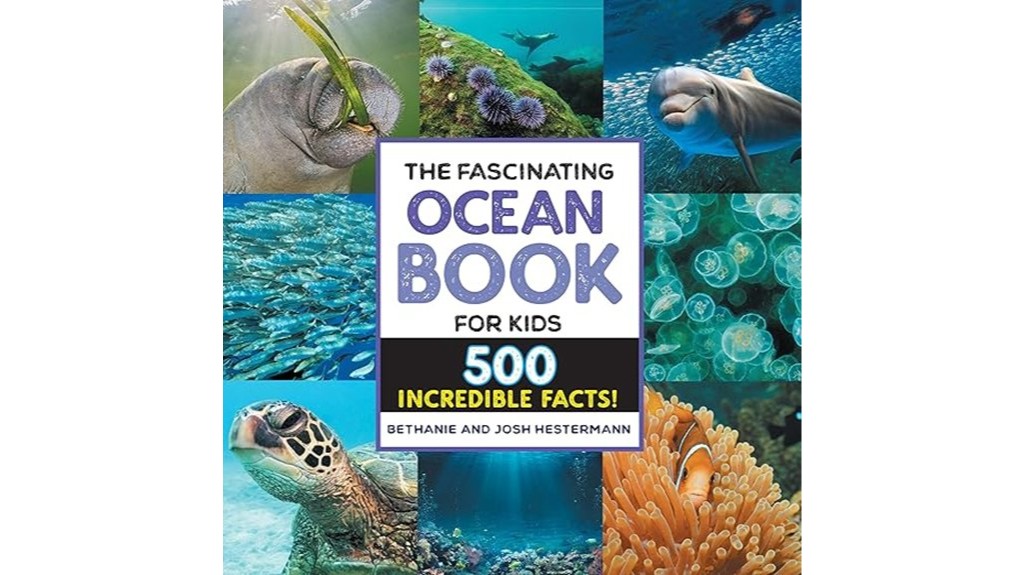
Young ocean enthusiasts will find their perfect match in “The Fascinating Ocean Book for Kids: 500 Incredible Facts,” a vibrant hardcover that transforms curious children into enthusiastic marine explorers. You’ll discover this book captivates readers aged 3-9, encouraging independent reading through colorful images and engaging content. It’s particularly effective at sparking interest in children who typically avoid books, making it an excellent literacy tool. While some find the information basic for older kids, you’ll appreciate its broad appeal—even adults enjoy the fascinating facts. The book makes an ideal gift choice for ocean-loving children in your life.
Best For: Young children aged 3-9 who are curious about ocean life, especially those who need engaging visuals and facts to develop their reading skills and scientific interest.
Pros:
- Captivates children across a wide age range (3-9) and encourages independent reading through colorful, vibrant images
- Successfully engages children who typically avoid books, making it an effective literacy tool for reluctant readers
- Appeals to both children and adults, making it an excellent gift choice with broad family enjoyment
Cons:
- Information may be too basic for older children who need more advanced content
- Some users report disappointing physical quality, describing it as cheaply made with non-glossy pages
- Limited depth of content may not satisfy children seeking more detailed scientific information
National Audubon Society Guide to Marine Mammals of the World
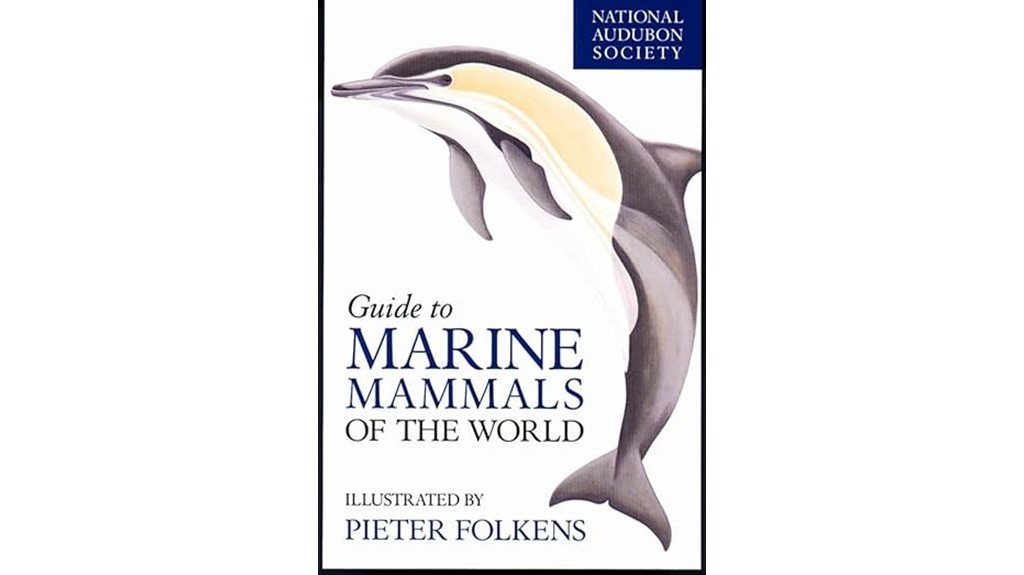
Educational enthusiasts seeking a thorough home reference will find the National Audubon Society Guide to Marine Mammals of the World an invaluable resource. This extensive 500-page guide covers whales, dolphins, sea lions, polar bears, and otters with scientific accuracy. You’ll appreciate the clear text, detailed illustrations, and engaging photographs that make learning accessible for everyone from children to aspiring marine biologists.
However, you shouldn’t expect a portable field guide. At 1.5 inches thick and 6×9 inches, it’s too heavy for whale watching trips. While some information may be outdated, you’ll still find it excellent for discovering both common and obscure species at home.
Best For: Educational enthusiasts, families with children interested in marine life, aspiring marine biologists, and anyone seeking a comprehensive home reference guide for marine mammals.
Pros:
- Comprehensive 500-page coverage of diverse marine mammals including whales, dolphins, sea lions, polar bears, and otters with scientific accuracy
- Excellent visual learning experience with detailed illustrations and engaging photographs that enhance understanding
- Suitable for wide range of audiences from children to adults, making complex information accessible to all learning levels
Cons:
- Too heavy and bulky (1.5 inches thick, 6×9 inches) for practical field use during whale watching or marine excursions
- Contains somewhat outdated information regarding recent species discoveries and taxonomic changes
- Lacks technical references and detailed research citations that serious researchers might require
The Soul of an Octopus: A Surprising Exploration into the Wonder of Consciousness
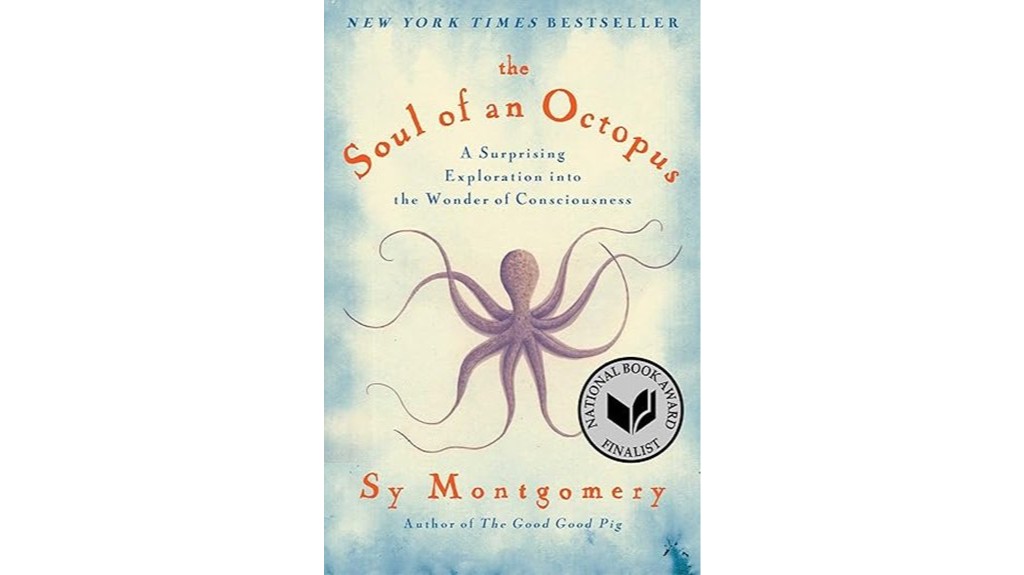
If you’re fascinated by animal consciousness and crave a deeply personal exploration of intelligence beyond human understanding, Sy Montgomery’s *The Soul of an Octopus* offers an extraordinary journey into the minds of Earth’s most enigmatic creatures. Montgomery’s weekly trips to Boston’s New England Aquarium reveal octopuses as remarkably intelligent beings who solve puzzles, display emotions through color changes, and form individual preferences. Their distributed brains create intelligence fundamentally different from vertebrates, challenging our understanding of consciousness. You’ll discover creatures that express excitement in red hues and calmness in white, escape when bored, and demonstrate problem-solving abilities that’ll transform your perspective on marine intelligence forever.
Best For: Readers interested in animal intelligence, consciousness studies, and personal narratives that blend scientific exploration with emotional storytelling about marine life.
Pros:
- Combines rigorous scientific research with deeply personal storytelling, making complex concepts about animal consciousness accessible and engaging
- Offers transformative insights into octopus intelligence and behavior that challenge conventional understanding of non-vertebrate cognition
- Provides ethical perspectives that encourage readers to reconsider their relationship with marine animals and consumption choices
Cons:
- The highly personal narrative style may not appeal to readers seeking purely scientific or academic treatment of the subject
- Heavy focus on emotional connections with captive animals might concern readers who prefer wildlife studied in natural habitats
- The anthropomorphic approach to describing octopus behavior could be viewed as overly sentimental by some scientific purists
Knowledge Encyclopedia Ocean!
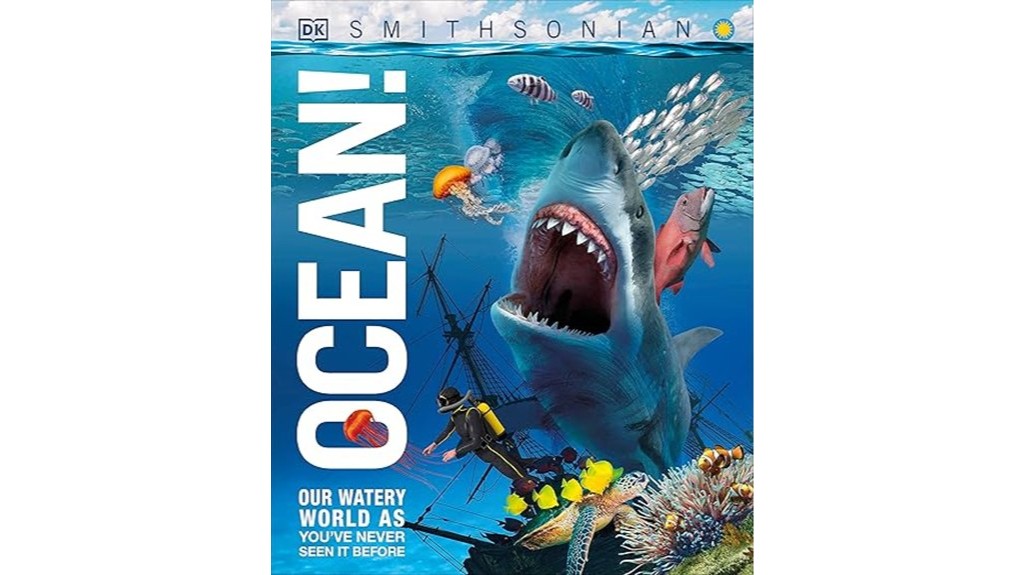
Three standout qualities make Knowledge Encyclopedia Ocean! by DK the perfect choice for families seeking an engaging marine biology resource: stunning visual presentation, educational depth, and cross-generational appeal. You’ll discover vibrant photos and detailed illustrations that bring underwater worlds to life, making complex marine ecosystems accessible to curious minds of all ages.
The hardcover format guarantees durability while beautiful organization keeps fascinating information about ocean creatures and exploration easy to navigate. You’ll find children naturally engage with the content, often matching toy sea animals to pictures while absorbing knowledge about marine life. Though some users note it’s less thorough than other DK encyclopedias, you’ll appreciate its enchanting visuals and educational impact for classroom libraries or family learning.
Best For: Families with children, teachers building classroom libraries, and ocean enthusiasts of all ages who want an engaging visual resource for learning about marine life and underwater ecosystems.
Pros:
- Stunning visual presentation with vibrant photos and detailed illustrations that bring marine life to life
- Durable hardcover format with beautiful organization that makes complex information easy to navigate
- Strong educational impact that encourages interactive learning and helps children retain knowledge about ocean creatures
Cons:
- Less comprehensive than other DK encyclopedia versions such as dinosaur or animal books
- May not provide the depth of information that advanced learners or researchers require
- Limited to English language accessibility only
Factors to Consider When Choosing Marine Biology Books
When I’m selecting marine biology books, I consider several key factors that’ll determine whether a book meets your specific needs and interests. The age and reading level must match your comprehension abilities, while the choice between academic versus popular content depends on whether you’re seeking rigorous scientific detail or accessible explanations. I also evaluate the visual quality of illustrations, portability for field use, and whether the book specializes in your particular area of marine biology interest.
Age and Reading Level
One essential factor I’ll examine when selecting marine biology books is matching the content to your reader’s age and comprehension level. Children’s books feature engaging illustrations and simplified vocabulary that make complex ocean concepts accessible, while adult texts contain sophisticated scientific terminology and detailed research findings.
I’ll assess whether the book’s language complexity aligns with your reader’s abilities. Younger audiences benefit from straightforward explanations and visual storytelling, whereas advanced students can handle intricate discussions of marine ecosystems and organism behavior.
The depth of information matters considerably. Beginner books focus on fascinating facts and general overviews, while specialized texts dive deep into specific research areas. I’ll make sure the content matches your reader’s curiosity level and existing knowledge base for best learning outcomes.
Academic Vs Popular Content
Beyond matching reading levels, you’ll need to decide between academic and popular marine biology content based on your specific goals. Academic books offer thorough scientific research, methodologies, and data analysis that’ll serve you well if you’re pursuing serious study or research. They emphasize statistical methods and mathematical modeling, reflecting modern data-driven approaches in marine biology. However, expect complex terminology and theories that require focused attention.
Popular marine biology books present information through engaging storytelling and illustrations, making them perfect for recreational reading or introductory exploration. They simplify concepts for easier understanding but sacrifice depth. I’d recommend academic texts if you’re conducting rigorous studies, while popular books work better for casual learning or sparking initial interest in marine life.
Visual Quality and Illustrations
Pictures speak louder than words when you’re exploring the underwater world through marine biology books. I’ve found that high-quality illustrations make complex concepts accessible and engaging, transforming dense scientific information into digestible visual experiences. Vibrant, detailed visuals help you identify marine species and connect theoretical knowledge with real-life examples you might encounter while diving or snorkeling.
I recommend choosing books with durable illustrations, especially hardcover editions that withstand repeated use in classrooms or field studies. Well-designed layouts that integrate visuals with text enhance information retention and create interactive learning opportunities. The artistic presentation of marine life often sparks curiosity, encouraging you to explore ocean ecosystems further. Quality illustrations aren’t just decorative—they’re essential educational tools that bridge the gap between scientific text and underwater reality.
Field Guide Portability
Functionality matters more than aesthetics when you’re selecting a marine biology field guide for outdoor adventures. I’ve learned that weight and thickness markedly impact your field experience during whale watching or snorkeling excursions. You’ll want a compact, portable design that won’t weigh down your gear while exploring tide pools or coastal areas.
I recommend checking for durable covers and binding that can withstand saltwater exposure and frequent handling. The guide’s organization should be intuitive—look for color-coded pages or thorough indexes that help you quickly identify species when you’re in the field. Finding the right balance between detailed illustrations and informative content guarantees you’ll have an effective reference tool that actually enhances your marine exploration rather than hindering it.
Subject Area Specialization
While general marine biology books offer broad overviews, I’ve found that choosing texts with specific subject area specialization dramatically improves your learning experience and practical knowledge.
Books focusing on particular marine species provide detailed information on their biology, behavior, and ecological importance, making them valuable for both casual readers and serious students. I recommend texts emphasizing marine conservation and environmental issues since they enhance understanding of challenges facing marine ecosystems. This knowledge proves essential if you’re pursuing marine biology professionally or want deeper insight into ocean preservation efforts.
Conclusion
I’ve curated these 15 marine biology books to fuel your passion for ocean exploration, whether you’re starting your academic journey or simply love marine life. From thorough textbooks to engaging narratives about octopus consciousness, there’s something here for every learning style and interest level. Consider your current knowledge, specific marine topics that fascinate you, and whether you prefer scientific depth or accessible storytelling when making your selection.
Besides marine biology book,s if you love marine life you can dive in our marine-inspired gift collection — perfect for ocean lovers and wildlife enthusiasts alike. Explore eco-friendly T-shirts, including our whale, sea star, and shark designs made from soft organic cotton. Pair them with our ocean-themed stickers, dolphin and shark tote bags, nature-inspired notebooks, eco-friendly scrunchies, and wildlife print bandanas — thoughtful, sustainable pieces that celebrate the beauty of marine life and support conservation.

Erzsebet Frey (Eli Frey) is an ecologist and online entrepreneur with a Master of Science in Ecology from the University of Belgrade. Originally from Serbia, she has lived in Sri Lanka since 2017. Eli has worked internationally in countries like Oman, Brazil, Germany, and Sri Lanka. In 2018, she expanded into SEO and blogging, completing courses from UC Davis and Edinburgh. Eli has founded multiple websites focused on biology, ecology, environmental science, sustainable and simple living, and outdoor activities. She enjoys creating nature and simple living videos on YouTube and participates in speleology, diving, and hiking.
From the shop
Gifts for people who love the wild
Wildlife themed t-shirts, notebooks, tote bags, bandanas and guides, designed by an ecologist.
Visit the shop